Latest from Solve

FEATUREDAugust 24, 2026Thomson Reuters and Solve Intelligence Partner to Deepen AI Adoption Across Leading Patent PracticesSolve Intelligence’s partnership with Thomson Reuters brings together Solve’s patent and IP platform and practitioner-led support with Thomson Reuters’ longstanding experience helping global law firms adopt professional technology.
Solve Intelligence brings patent-specific AI capabilities to Google Cloud's Gemini Enterprise for LegalSolve Intelligence is pleased to announce that it is a launch partner for Google Cloud’s Gemini Enterprise for Legal.
Page White Farrer Adopts Solve Intelligence for AI-Assisted Patent DraftingPage White Farrer Adopts Solve Intelligence and Solve's AI Templates Page White Farrer ("PWF"), a specialist intellectual property firm with a longstanding focus on technology-driven innovation, has selected Solve Intelligence to support patent application drafting following an extensive evaluation of available AI tools. The firm has initially deployed the platform within its technology-focused patent teams, supporting work across sectors such as AI, software, telecommunications, electronics, semiconductors and engineering. The firm's objective was not to automate legal judgement or replace attorney expertise, but to accelerate the preparation of high-quality first drafts of patent applications. By combining AI-assisted drafting with custom templates tailored to the firm's preferred drafting approaches, Solve Intelligence helps attorneys move from an initial claim set to a reviewable first draft more efficiently while maintaining consistency and technical accuracy. For this partnership, PWF's primary focus was on configuring the platform around the firm's own drafting conventions, client preferences and established best practices, ensuring that the technology supports the way its attorneys already work.
Maiwald Chooses Solve Intelligence for Selected AI-Supported IP WorkflowsSolve Intelligence is proud to share that Maiwald, one of Germany’s largest and most progressive intellectual property firms, works with Solve Intelligence on selected AI-supported workflows in its patent and legal practice groups. Following an evaluation period during which selected functionalities were assessed for approved internal use cases, Maiwald and Solve have formed an enterprise partnership for 2026. The rollout reflects the same careful approach Maiwald brings to its client work. Solve enables customers in Europe to process data on servers located within Europe and holds recognized information-security certifications. In addition, Solve offers contractual commitments designed to protect confidential professional information in line with applicable statutory confidentiality obligations and professional conduct requirements. Against that background, any use of AI-supported tools took place only within approved governance structures and under applicable professional, contractual, confidentiality and data-protection requirements. That balance of innovation and professional judgment is characteristic of Maiwald. The firm has spent decades setting a standard for IP work in Europe: rigorous prosecution, a formidable contentious practice, and interdisciplinary teams of patent attorneys and attorneys-at-law working side by side. The firm approached AI the same way, methodically, with a clear sense of where it adds leverage and where an experienced attorney’s judgment remains irreplaceable.
PTAB Case Studies of AI Disclosure Requirements: Part IIThis article is the second of a series of Patent Trial & Appeal Board (PTAB) case studies (see Part I ), which aims to inform applicants’ approach to satisfying the written description and enablement requirements for patenting artificial intelligence (AI) and machine learning technologies.
How Successful Patent Practitioners Are Putting AI to WorkThe most effective patent practitioners are already using AI patent drafting to draft faster, catch claim inconsistencies earlier, and free up hours for the strategic work that actually wins allowances. Key takeaways AI patent drafting tools can reduce application drafting time by up to 80 percent, with Solve Intelligence customers consistently reporting 50 percent or greater efficiency gains across drafting and prosecution Roughly 9 out of 10 utility patent applications receive at least one office action rejection, so prosecution efficiency matters as much as drafting speed Solo attorneys use AI to match larger law firms on turnaround speed and client capacity The strongest reported results come from iterative AI–attorney collaboration, with practitioners directing the process and owning the final work product
Adopting AI in Patent Work: A Practical Playbook for IP TeamsSolve Intelligence works with over 700+ patent teams as they bring AI into daily practice, and the same pattern shows up again and again: recognising that AI helps is easy, but building consistent, team-wide use is not. Adoption tends to stall for a handful of reasons, from informal early experiments to unclear decision making, and a promising trial can fade out without anyone establishing whether the tool or the rollout was at fault. This playbook lays out the process that gets a team from first experiment to settled habit, with the attorney's judgment in control at every step.
Patent Proofreading: Leveraging AI for Precision and EfficiencyIn the ever-evolving world of intellectual property, ensuring the accuracy and precision of patent documents is crucial. Patent proofreading, a meticulous and essential step in the patent application process, has traditionally been a time-consuming and error-prone task. However, with the advent of AI technology, patent proofreading has undergone a significant transformation, offering enhanced efficiency and accuracy.
AI in Patent Drafting: Should You Use ChatGPT?The integration of artificial intelligence (AI) in various professional fields is becoming increasingly prevalent, and patent drafting is no exception. The process of drafting a patent application can be intricate and time-consuming, requiring precision, legal knowledge, and technical expertise. As AI continues to evolve, it presents new opportunities and challenges in the realm of patent drafting. This article explores the role of AI in patent drafting, how it is transforming the process, and the specific limitations of using ChatGPT for this purpose.
AI Patent Analysis: Benefits, Challenges, and Best PracticesAI patent analysis involves using machine learning and other advanced technologies to enhance the review and assessment of patents and patent applications. This technology streamlines processes such as reviewing invention disclosure documents, conducting novelty and obviousness analyses, and performing comprehensive patentability assessments.
Revolutionising Patent Writing - Welcome to Solve IntelligenceTl;dr: We use AI to help you write high-quality patents quickly. We do this by providing a simple in-browser document editor that any patent attorney or inventor can start using straight away
How to Choose Patent Drafting SoftwareWith the evolution of AI and automation technologies, patent drafting software has emerged as a tool that may be used by patent agents and attorneys. However, there are several things to consider when choosing and evaluating patent drafting software, such as accuracy, natural language processing, customization, integration, collaboration, and compliance with patent laws, which are vital for producing legally robust patent applications.
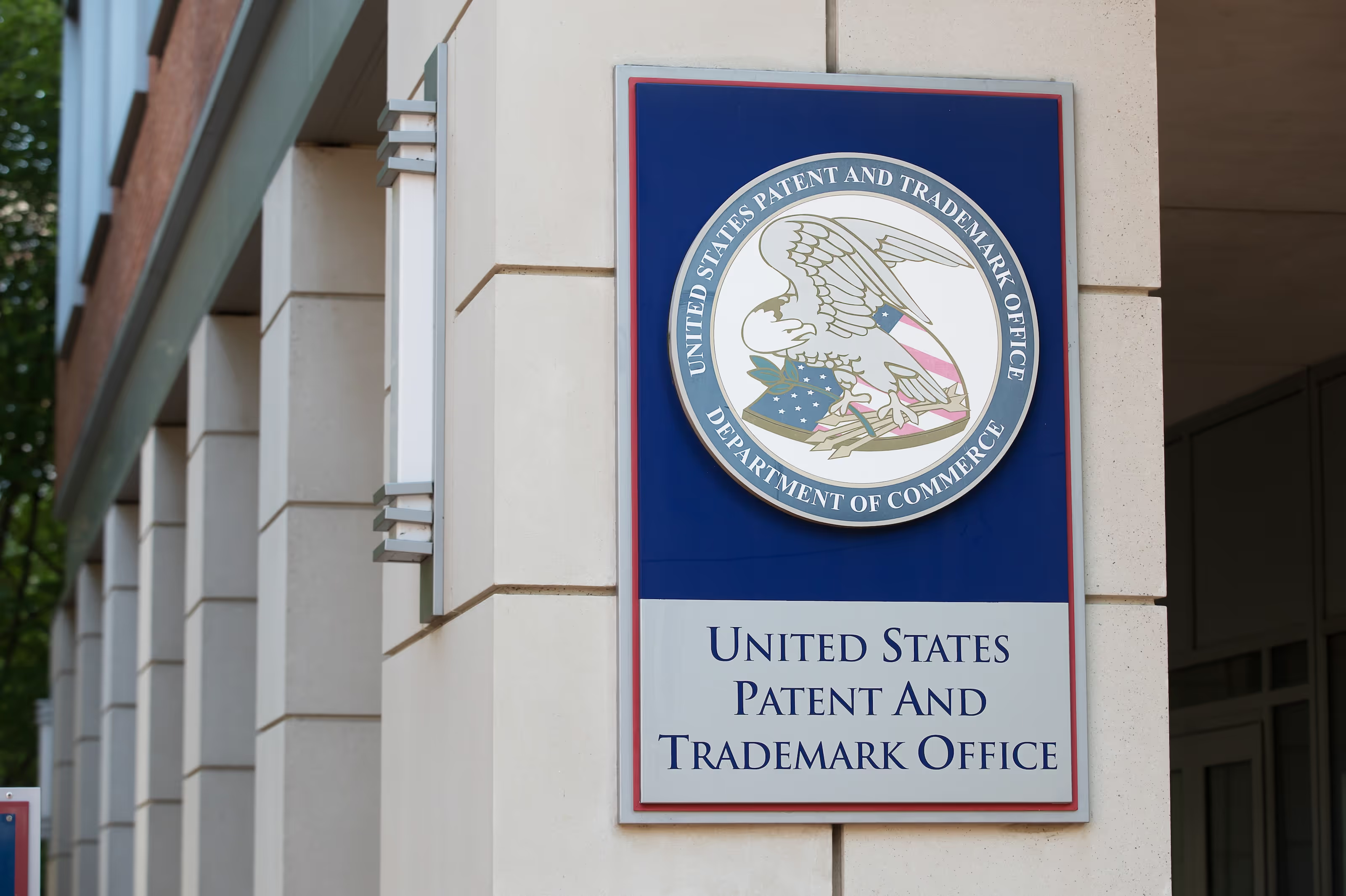
Using Generative AI Tools to Prepare USPTO SubmissionsThe integration of generative AI into the United States Patent and Trademark Office (USPTO) submission processes is reshaping the landscape of patent and trademark filings. This article provides an overview of all prior guidance from the USPTO on the use of AI and explores the multifaceted role of AI tools in enhancing efficiency, ensuring compliance, and navigating the complex legal and ethical landscapes of patent applications. From drafting patent applications to managing confidentiality and security, legal practitioners must adapt to maintain accuracy, inventorship integrity, and ethical standards in their submissions. Given the numerous practical applications and their benefits, generative AI is becoming an indispensable asset in legal practices, especially in interactions with the USPTO systems.
How to Automate Patent Drafting with AI?The emergence of artificial intelligence opened the door for countless new applications and tools, including AI tools for patent drafting, automated patent drafting, and AI patent drafting assistants. For example, AI may be used to assist with various tasks throughout the patent drafting process, including invention disclosure form creation, analysis, and enhancement; patentability reviews and assessments; and drafting applications.
How Scale LLP Increases Patent Drafting Efficiency by 40-60%Boosting patent drafting efficiency by 40-60%, Scale LLP uses Solve Intelligence Patent Copilot™ to enhance quality, streamline workflows, and more.
International Patent Office Guidance on Artificial Intelligence InventionsStephen Hou, VP & COO of American Patent Agency and long-time customer of Solve Intelligence™, explores the impact of artificial intelligence on patent law, focusing on new regulations for AI patent drafting and AI inventorship across major global patent offices. Stephen describes how jurisdictions in the IP5 (China, Europe, Japan, Korea, and the United States) are updating their guidelines to address the challenges of AI in the patent process, specifically stating that AI cannot be an inventor but highlighting its role in aiding human-driven patentable innovations. This highlights the growing role of artificial intelligence in patent law.
Solve Intelligence Joins Intel IgniteIntel® Ignite announce that Solve Intelligence™ is among the 2024 Intel Ignite companies.
USPTO’s Guidance on the Use of Artificial IntelligenceAs Artificial Intelligence (AI) and large language models (LLMs) increasingly integrate into legal practices, the U.S. Patent and Trademark Office (USPTO) issued new guidance to assist patent attorneys and the public with its adoption, including the adoption of patent software and AI tools in assisting intellectual property attorneys with the patent drafting process, patent prosecution, and other areas of patent law.
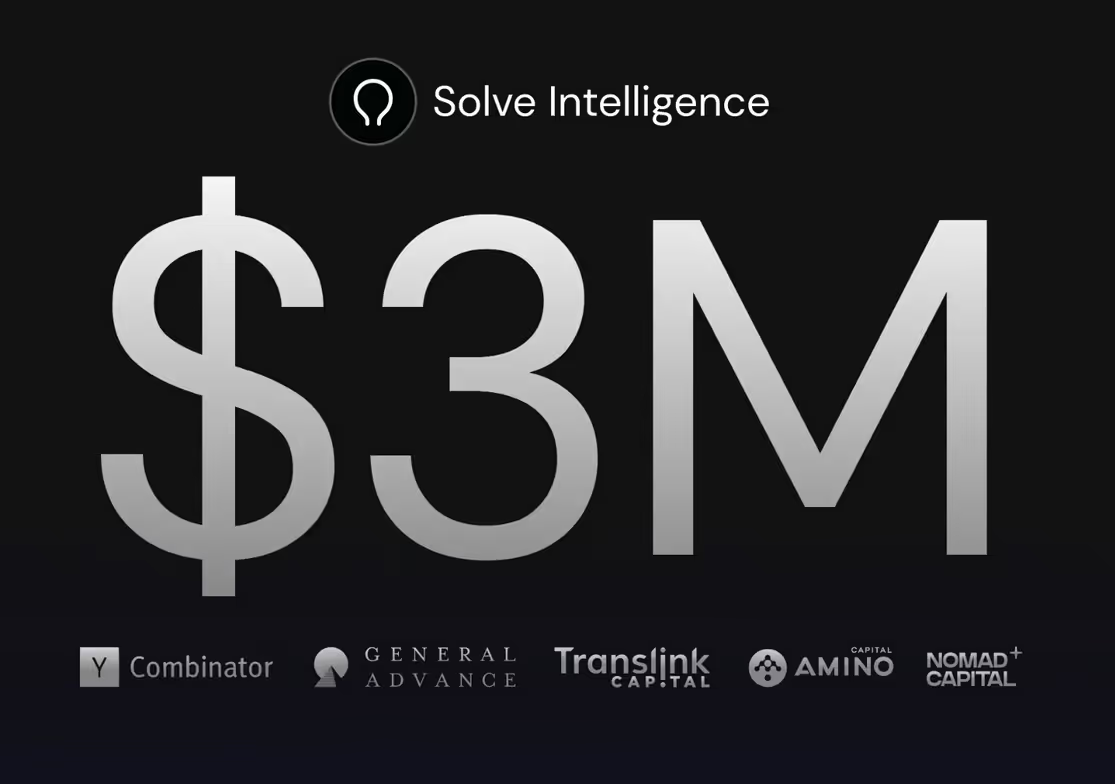
Solve Intelligence raises $3MWho invested in us. Where we’re going.
Insights from the 2023 Robot Patent Drafting Conference: The Future of AI in Patent LawKey insights from the 2023 Robot Patent Drafting Conference emphasize the importance of confidentiality in AI integration, the necessity for adaptable AI approaches, and acknowledge a notable 5x efficiency increase over the last 18 months, indicating a pragmatic shift in AI-driven patent law.
Analyzing and Enhancing Invention Disclosures with AISolve Intelligence introduces an AI-enhanced document editor that streamlines patent drafting by filling in invention disclosure gaps and preempting competitor workarounds, ensuring comprehensive and robust patent applications.
AI Patent Drafting with Example-Based CustomizationSolve Intelligence's AI software now automatically configures itself from provided patent examples to adopt their unique drafting style, enhancing personalization and streamlining the patent drafting process for attorneys.
AI-Powered Patent Proofreading and AnalysisSolve Intelligence leverages advanced AI to enhance patent proofreading and analysis, offering detailed comments for higher quality, enforceable patents.
AI-Driven Patent Drawing Analysis and IntegrationSolve Intelligence's AI-enhanced document editor streamlines patent drafting by automating the integration of technical drawings and reference labels into the specification, offering a precise and efficient approach to patent drafting.
Patent Drafting with Custom AI StylesSolve Intelligence introduces customizable AI style presets in our patent drafting software, ensuring attorneys can infuse their unique style into efficient, high-quality patents while maintaining firm-specific confidentiality.
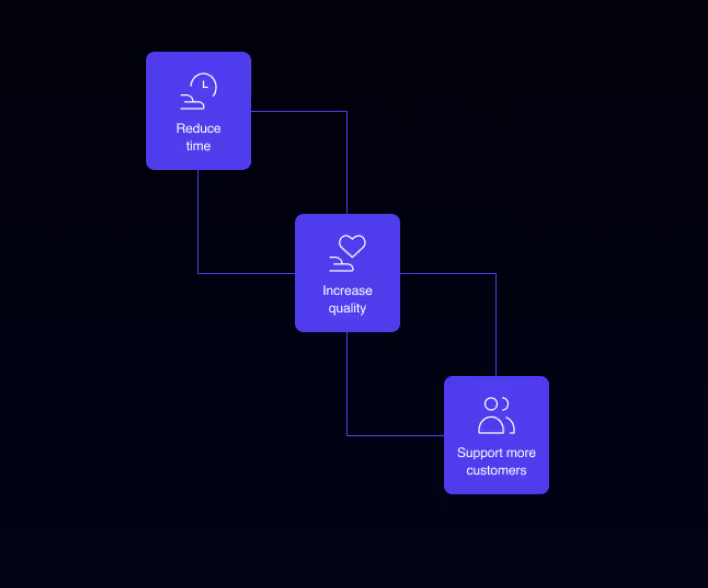
Customers report 50%+ efficiency and quality improvements.
Cookie settingsBy clicking “Accept all”, you agree to the storing of cookies on your device to enhance site navigation, analyze site usage, and assist in our marketing efforts. For further details see ourManage cookie preferencesChoose which cookies we may store on your device. Essentials keep the site working and cannot be turned off.EssentialsNecessary for the site to function. Always on.Always activeAnalyticsMeasures usage and improves your experience.MarketingUsed for targeted advertising.Cookie preferences