At ILTACON 2026, patent and IP teams pushed past piloting AI toward firm-wide rollout. They evaluated tools against specific criteria like claim chart citations and office action drafting, not just general AI capability. Solve Intelligence used the event to announce a new partnership with Thomson Reuters.
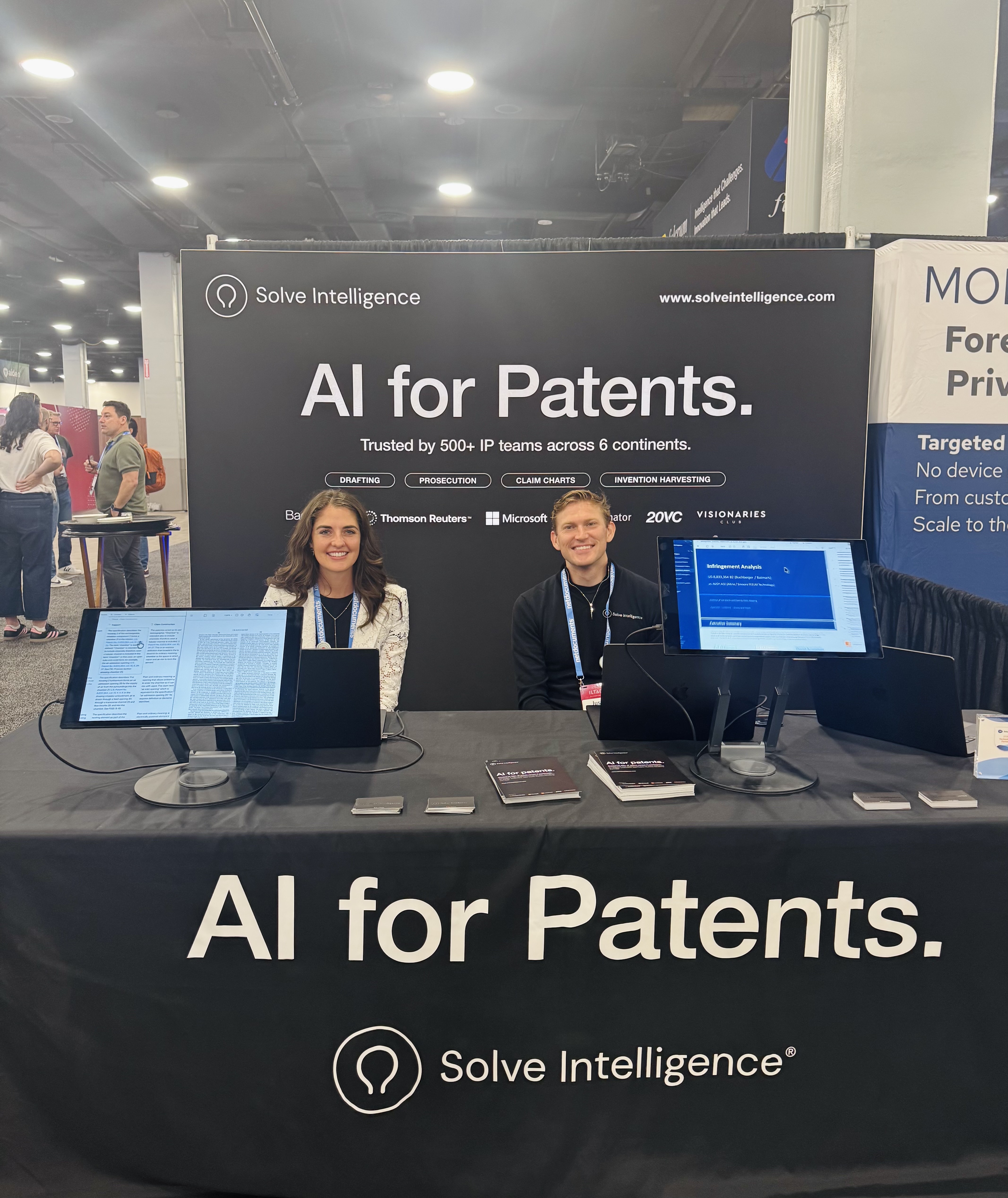
ILTACON is the legal industry's biggest technology gathering, and this year's edition ran August 23 to 27 at the Gaylord Opryland Resort & Convention Center in Nashville. Solve Intelligence exhibited all week, demoing patent drafting, patent prosecution, and claim chart workflows and talking with IP teams from firms across the AmLaw 200 and beyond.
The clearest shift at ILTACON this year is that firms have moved past proving AI can save time on a single task. Now they’re asking how to take a tool a few enthusiastic attorneys adopted on their own and roll it out across the whole practice group.
That's harder for patent work than for most practice areas, because decisions made early in the process echo later. Claim language drafted today shapes prosecution strategy tomorrow, and prosecution history shapes validity and infringement analysis years down the line.
Plenty of firms start with just one workflow (drafting is the most common entry point) and get real value there on its own. The advantage of a single platform spanning drafting, prosecution, and claim charts shows up if and when a firm wants to extend AI into the next stage: the same templates and client/jurisdiction styles carry over instead of starting from scratch with a different tool.
A few years ago, simply using AI was a strong enough differentiator. That bar has moved. ILTACON sessions on tool selection told firms to stop assuming one platform can serve every practice group, and we saw the same pattern at our booth: many IP teams had already trialed another AI tool before stopping by.
The bar they're evaluating against now is specific:
Our FTO analysis and infringement chart demos were a useful way to show that difference, since they're the kind of claim-mapping work a generalist AI tool doesn't attempt.
Against that backdrop, Solve Intelligence announced a new partnership with Thomson Reuters during ILTACON to bring purpose-built patent AI to more IP firms, with fewer disconnected point solutions to procure and secure.
Rollout stays practitioner-led as firms configure Solve Intelligence to their own drafting conventions and client needs, with onboarding from Solve Intelligence's team of patent attorneys, AI researchers, and implementation specialists.
ILTACON was a great place for attendees to ask what happens when you move from one enthusiastic user to the whole practice group, and whether the tool was built for patent work or adapted from something general.
Whether you're scaling drafting, prosecution, or claim chart work across the practice group, Solve Intelligence's platform is built to support that shift without losing quality control.