AI Patent Figure Drafting: Benefits & Key Features

Artificial intelligence (AI) has made its mark on numerous industries, revolutionizing processes that were once labor-intensive, error-prone, and time-consuming. In the realm of intellectual property (IP), AI is becoming an essential tool, with applications ranging from prior art searches to automating patent drafting. Among these breakthroughs, AI patent figure generation is one of the most promising, offering significant improvements in the way technical drawings are created for patent applications.

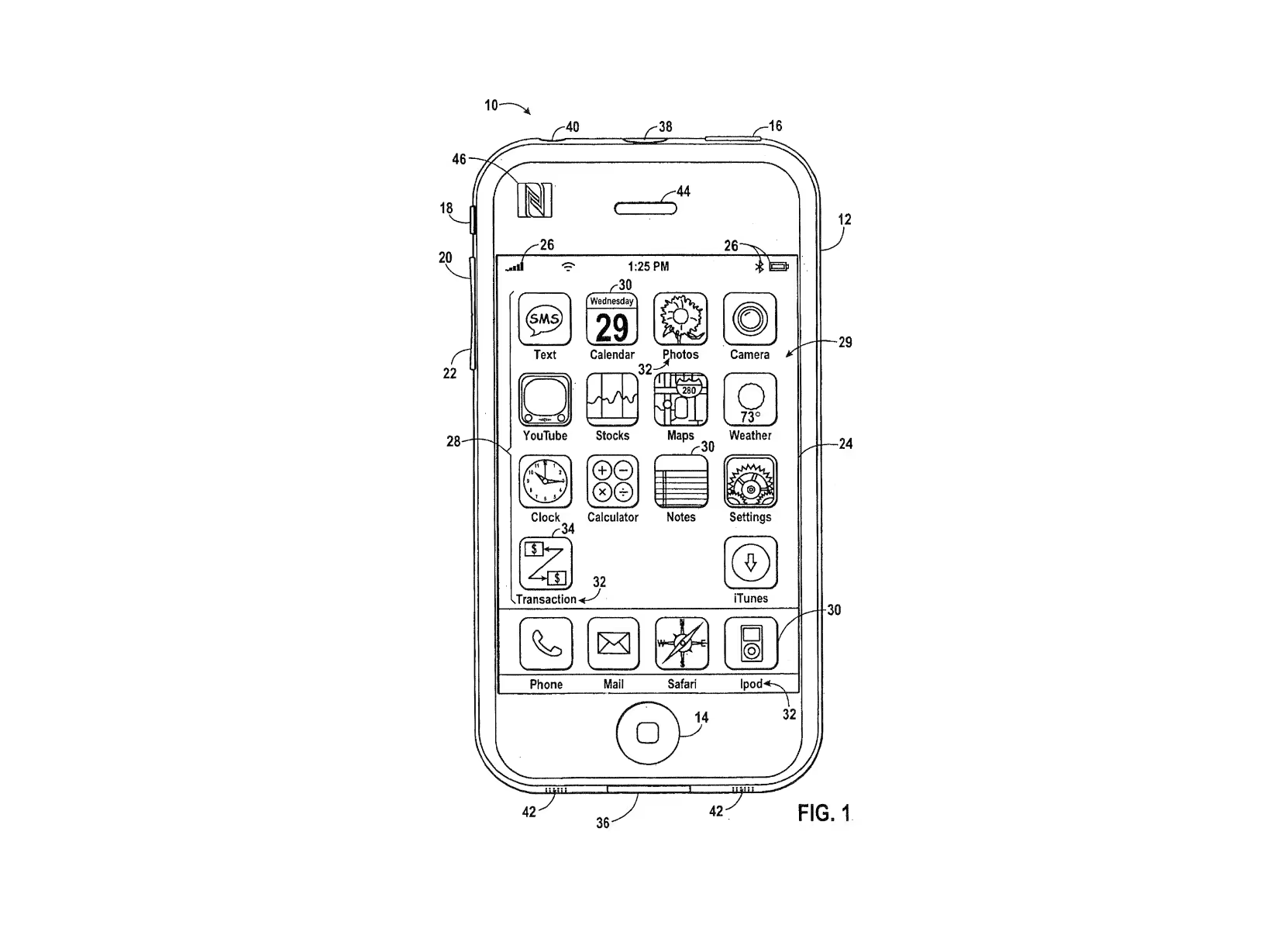
Patent figures are a crucial part of the patent filing process, serving as visual representations of inventions. These drawings must be clear, accurate, and compliant with the strict requirements of patent offices around the world. Traditionally, this task required the skills of professional draftsmen or patent illustrators. However, advancements in AI patent figure tools have the potential to streamline this process, reducing time, cost, and errors while improving the overall quality and accessibility of patent drawings.

This article will explore how AI tools for patent figure drafting work, their benefits, and the key features likely to shape the future of patent figure creation.

AI Patent Figure Drafting: Benefits & Key Features

How AI Patent Figure Generation Works

The application of AI in patent drawing software is built on a combination of several technologies: machine learning (ML), computer vision, and natural language processing (NLP). These systems analyze inputs such as text descriptions, diagrams, or CAD models and assist in the generation of accurate, professional-quality patent figures.

Here’s how it typically works:

Image Recognition and Generation: AI-powered tools can interpret input images, technical sketches, or even 3D models to create patent-compliant figures. These systems leverage computer vision, which allows the AI to “understand” the structure of an image, automatically generate line drawings, and ensure elements are presented clearly and consistently.

  1. Natural Language Processing: Using NLP, AI tools can analyze patent claims or technical descriptions and translate this information into visual form. This capability holds great potential for the future. Instead of manually sketching every aspect of a figure, inventors and patent attorneys may one day simply input descriptions, and AI will generate corresponding images that accurately reflect the invention.
  2. Automated Labeling: A key pain point in patent figure creation is adding and arranging labels. These labels identify components of the invention and must comply with strict guidelines. AI-generated figure element labels automate this process, reducing errors and ensuring that all parts of the drawing are clearly annotated according to patent office requirements.

As these technologies continue to evolve, we can expect patent figure tools to become even more intelligent, capable of greater autonomy in drafting and labeling, and offering higher levels of customization for inventors.

Benefits of AI Patent Figure Tools

The integration of AI into patent figure generation promises to revolutionize the process for inventors, patent attorneys, and IP professionals alike. The following are some of the most significant benefits of AI patent figure tools:

1. Significant Time Savings

One of the most time-consuming aspects of the patent application process is the creation of detailed, accurate patent figures. These drawings need to be precise, well-labeled, and compliant with a host of jurisdiction-specific rules. Traditionally, this process could take days or even weeks, depending on the complexity of the invention.

By leveraging AI tools for patent figure drafting, this time can be cut down drastically. AI systems can generate high-quality figures in a matter of minutes, offering users a much faster turnaround time. This allows inventors and IP professionals to focus on other critical aspects of the patent process, such as writing claims or preparing technical documentation.

2. Cost Reduction

Hiring a professional illustrator to create patent figures can be expensive, especially for complex inventions that require detailed drawings. Additionally, if errors or non-compliance are found in a patent figure, the process must be repeated, leading to additional costs.

AI patent figure tools offer a cost-effective alternative. By automating much of the drafting process, AI reduces the need for manual labor, lowering the overall cost of preparing a patent application. As the technology becomes more widespread, it is likely to become an indispensable tool for independent inventors and small businesses, allowing them to produce patent figures without breaking the bank.

3. Increased Accuracy and Compliance

Creating patent figures is not just about drawing a picture of the invention. The figures must adhere to strict rules set by patent offices, which dictate everything from the thickness of lines to the arrangement of labels. Failing to comply with these rules can result in the rejection of the entire application.

AI systems are programmed to understand these rules, ensuring that every figure they generate is compliant with the relevant guidelines. This significantly reduces the risk of errors and rejection, saving both time and money. Features like AI-generated figure element labels automatically assign and position labels according to the rules of the patent office, eliminating one of the most common sources of mistakes.

4. Accessibility for Non-Experts

Patent figure drafting has historically been a highly specialized skill, requiring years of experience to master. However, AI patent figure tools democratize access to this capability. Inventors with little to no experience in technical drawing can now use AI to generate professional-quality figures with ease.

The result is a more accessible patent application process, where even individual inventors or small businesses can create and submit patent figures without relying on expensive professional services. As these tools continue to develop, we can expect even more intuitive interfaces and user-friendly features.

Key Features of Future AI Patent Drawing Tools

Looking forward, the next generation of AI patent figure tools will likely incorporate even more advanced capabilities, providing users with powerful new ways to generate and customize patent drawings. Here are some of the key features we expect to see in the near future:

1. Automated Figure Generation from Text

One of the most exciting possibilities for the future of AI in patent drafting is the ability to automatically generate patent figures from textual descriptions. Using natural language processing (NLP), AI tools could take a technical description, such as a patent claim, and generate a corresponding figure that accurately represents the invention.

This would significantly streamline the drafting process, allowing inventors to focus on the technical description without worrying about the visual representation. AI could take care of the rest, generating detailed, compliant figures automatically.

2. Real-Time Compliance Checking

As patent rules and regulations evolve, keeping up with the latest standards can be a challenge. Future patent drafting tools could incorporate real-time compliance checking, ensuring that every figure generated is up-to-date with current guidelines from patent offices around the world.

Such systems could also alert users to potential issues, such as missing labels, improper scaling, or incorrect line thicknesses, providing suggestions for corrections. This would further reduce the risk of rejection and save time by addressing compliance issues early in the drafting process.

3. Customizable Templates and Industry-Specific Solutions

While AI can automate much of the patent drafting process, every invention is unique, and different industries have specific needs. The next generation of AI patent figure tools will likely offer customizable templates tailored to different industries, from mechanical engineering to biotechnology.

These templates could provide a starting point for figure creation, making it easier to generate drawings that meet the particular requirements of each field. Users would then be able to customize the figures as needed, ensuring that their invention is represented as accurately as possible.

4. Seamless Integration with Patent Filing Systems

As AI-driven tools continue to evolve, we can expect greater integration with broader patent management and filing systems. Future tools could provide a seamless workflow, from drafting patent figures to filing the application with the relevant patent office. This integration would save time and reduce the administrative burden on patent professionals.

The Future of Patent Drafting with AI

As we look to the future, it is clear that AI has the potential to reshape the entire patent drafting process. AI patent figure generation offers a faster, more efficient, and cost-effective way to create the visual components of a patent application while reducing the risk of errors and rejection.

The ongoing evolution of AI patent figure tools promises even more exciting possibilities, from automated figure generation based on text descriptions to real-time compliance checking and industry-specific solutions. These advancements will make the patent process more accessible, not just for large corporations but also for individual inventors and small businesses.

Ultimately, the rise of AI tools for patent figure drafting represents a major leap forward for intellectual property professionals. By embracing these technologies, the patent process will become more streamlined, accurate, and accessible, enabling innovators to protect their inventions more efficiently and effectively.

Here at Solve Intelligence, we are committed to building AI-powered platforms that assist with every aspect of the patenting process while keeping patent professionals at the helm of these powerful tools. In this way, we give patent practitioners the control needed to reap AI's benefits while mitigating its associated challenges. Our Patent Copilot™ helps with patent drafting, patent filing, patent prosecution, office action analysis, patent portfolio strategy and management, and future patent infringement analyses. At each stage, our Patent Copilot™ works with the patent professional, keeping them in the driving seat, thereby equipping legal professionals, law firms, companies, and inventors with the tools to help develop the full scope of protection for their inventions.

AI for patents.

Be 50%+ more productive. Join thousands of legal professionals around the World using Solve’s Patent Copilot™ for drafting, prosecution, invention harvesting, and more.

Related articles

Marbury Law sees 3x-4x efficiency gain from using Solve Intelligence

Key Insights

  • AI adoption requires proof. Bob and his team tested multiple tools before committing, and only moved forward once they saw quantifiable results.
  • 3 to 4x efficiency gains changed the business case. By tracking his own drafting time, Bob demonstrated that AI-enabled workflows made fixed-fee work viable at partner rates.
  • Demonstration drives adoption. Live drafting sessions, client transparency, and side-by-side cost comparisons created full buy-in from both clients and colleagues.
  • Integrated chat removes friction. Keeping research, drafting, and revisions inside one contextual workspace eliminated copy-paste workflows and saved significant time.
  • Context is a force multiplier. AI performs best when it understands the full invention disclosure, file history, and drafting materials in one place.
  • Speed expands strategic value. Faster drafting didn’t just save time - it enabled better coverage, stronger enablement, and real-time responsiveness to client needs.

About Marbury Law

The Marbury Law Group is a premier mid-size, full-service intellectual property and technology law firm in the Washington, D.C. area, with additional strength in commercial law, litigation, and trademark litigation. Recognized by Juristat as a top 35 law firm nationwide and holding Martindale-Hubbell’s AV® Preeminent™ Peer Review Rating, Marbury serves clients ranging from Fortune 500 companies and mid-size technology businesses to high-tech startups and inventors. Its practitioners bring unusually wide-ranging experience, including former technology executives, government R&D managers, startup founders, in-house counsel, “big-law” attorneys, USPTO patent examiners, and judicial clerks. 

Marbury delivers “big-law” service with the flexibility and personal attention of a smaller firm, pairing high-quality work with efficient, budget-aware billing. Based near the USPTO, the firm has drafted and prosecuted thousands of U.S. and foreign patent applications and trademarks, and advises on IP strategy, diligence, and licensing. Formed in 2009 through the merger of two established practices (with roots dating back to 1994), the firm takes its name from Marbury v. Madison (1803), the landmark Supreme Court case that established judicial review.

Introduction

When we sat down with Bob Hansen for this conversation, we knew it would be grounded in both legal depth and real-world business experience. Bob is a founding partner of The Marbury Law Group and has extensive experience across patent prosecution, litigation, licensing, portfolio strategy, and complex IP transactions. But what makes his perspective particularly compelling is that he also brings 20 years of real-world experience as an engineer, program manager, and business executive in Fortune 50 companies and start-ups. He understands firsthand how innovation moves from idea to product, and how intellectual property law fits into that journey.

That dual lens is exactly why we wanted to have this discussion. Bob evaluates technology not just as a patent attorney, but as someone who has managed engineering teams, navigated acquisitions and divestitures, raised capital, and built businesses. When someone with that background says AI has been transformative and backs it up with measurable 3 to 4x efficiency gains, it’s worth listening.

Introducing Solve Review: A Practical Guide to AI-Powered Patent Review

Patent drafting doesn’t end when the first draft is complete. In many ways, the most important work begins at review.

Jurisdictional compliance, internal style alignment, claim clarity, sufficiency of disclosure, and formal requirements. Each aspect of drafting applications must be carefully checked before filing. Yet a thorough review is time-intensive, difficult to standardize, and hard to scale across teams and large portfolios, especially when up against a tight deadline.

Enter Solve Review

With Solve Review, practitioners can run structured, customizable AI-powered reviews in minutes rather than hours, while maintaining transparency, collaboration, and full control over the output. 

Teams using Solve Review report dramatically, with multi-pass manual reviews that previously took three to four hours completing in a fraction of the time

Key benefits

  • AI-powered patent reviews in minutes
  • Each review is fully customizable
  • Save your reviews as templates, run multiple reviews per application
  • Full transparency of working out and results
  • Resolve issues detected by Solve Review with AI

Potter Clarkson Enhances Patent Practice with Solve Intelligence

Solve Intelligence is deployed at Potter Clarkson as a practitioner-led platform, designed to enhance - not replace - the expertise of experienced patent attorneys. The firm uses the technology primarily at a senior level, where skilled practitioners are able to prompt and interrogate the system effectively to guide high-quality outputs.

By combining advanced AI capability with deep technical and legal experience, the platform enables senior attorneys to work more efficiently while focusing their time and judgement on strategic advice, complex analysis and client value. This reflects the firm’s long-standing philosophy that technology should strengthen the role of the practitioner, not substitute professional expertise.

“At Potter Clarkson, our priority is delivering technically rigorous and strategically sound advice to our clients. We use Solve Intelligence as a tool in the hands of experienced patent attorneys - professionals who understand how to guide, challenge and refine AI-generated outputs. It allows our senior teams to concentrate on the aspects of drafting and prosecution where their judgement adds the greatest value, while maintaining full control over quality and client strategy.”

Peter Finnie, Partner, Potter Clarkson

Since rolling out Solve Intelligence’s Patent Copilot, the firm has tailored the platform to reflect its established house styles and drafting standards. This customisation reduces administrative burden and supports consistency across teams, enabling practitioners to engage with AI efficiently without compromising on quality, client-specific requirements, or the firm’s distinctive approach.

Peter Finnie to join Solve's Customer Advisory Board

We are excited to welcome Peter Finnie, Partner at Potter Clarkson, to Solve Intelligence’s Customer Advisory Board.