FEATUREDAugust 24, 2026Thomson Reuters and Solve Intelligence Partner to Deepen AI Adoption Across Leading Patent PracticesSolve Intelligence’s partnership with Thomson Reuters brings together Solve’s patent and IP platform and practitioner-led support with Thomson Reuters’ longstanding experience helping global law firms adopt professional technology.
Solve Intelligence brings patent-specific AI capabilities to Google Cloud's Gemini Enterprise for LegalSolve Intelligence is pleased to announce that it is a launch partner for Google Cloud’s Gemini Enterprise for Legal.
Page White Farrer Adopts Solve Intelligence for AI-Assisted Patent DraftingPage White Farrer Adopts Solve Intelligence and Solve's AI Templates Page White Farrer ("PWF"), a specialist intellectual property firm with a longstanding focus on technology-driven innovation, has selected Solve Intelligence to support patent application drafting following an extensive evaluation of available AI tools. The firm has initially deployed the platform within its technology-focused patent teams, supporting work across sectors such as AI, software, telecommunications, electronics, semiconductors and engineering. The firm's objective was not to automate legal judgement or replace attorney expertise, but to accelerate the preparation of high-quality first drafts of patent applications. By combining AI-assisted drafting with custom templates tailored to the firm's preferred drafting approaches, Solve Intelligence helps attorneys move from an initial claim set to a reviewable first draft more efficiently while maintaining consistency and technical accuracy. For this partnership, PWF's primary focus was on configuring the platform around the firm's own drafting conventions, client preferences and established best practices, ensuring that the technology supports the way its attorneys already work.
Maiwald Chooses Solve Intelligence for Selected AI-Supported IP WorkflowsSolve Intelligence is proud to share that Maiwald, one of Germany’s largest and most progressive intellectual property firms, works with Solve Intelligence on selected AI-supported workflows in its patent and legal practice groups. Following an evaluation period during which selected functionalities were assessed for approved internal use cases, Maiwald and Solve have formed an enterprise partnership for 2026. The rollout reflects the same careful approach Maiwald brings to its client work. Solve enables customers in Europe to process data on servers located within Europe and holds recognized information-security certifications. In addition, Solve offers contractual commitments designed to protect confidential professional information in line with applicable statutory confidentiality obligations and professional conduct requirements. Against that background, any use of AI-supported tools took place only within approved governance structures and under applicable professional, contractual, confidentiality and data-protection requirements. That balance of innovation and professional judgment is characteristic of Maiwald. The firm has spent decades setting a standard for IP work in Europe: rigorous prosecution, a formidable contentious practice, and interdisciplinary teams of patent attorneys and attorneys-at-law working side by side. The firm approached AI the same way, methodically, with a clear sense of where it adds leverage and where an experienced attorney’s judgment remains irreplaceable.
PTAB Case Studies of AI Disclosure Requirements: Part IIThis article is the second of a series of Patent Trial & Appeal Board (PTAB) case studies (see Part I ), which aims to inform applicants’ approach to satisfying the written description and enablement requirements for patenting artificial intelligence (AI) and machine learning technologies.
How Successful Patent Practitioners Are Putting AI to WorkThe most effective patent practitioners are already using AI patent drafting to draft faster, catch claim inconsistencies earlier, and free up hours for the strategic work that actually wins allowances. Key takeaways AI patent drafting tools can reduce application drafting time by up to 80 percent, with Solve Intelligence customers consistently reporting 50 percent or greater efficiency gains across drafting and prosecution Roughly 9 out of 10 utility patent applications receive at least one office action rejection, so prosecution efficiency matters as much as drafting speed Solo attorneys use AI to match larger law firms on turnaround speed and client capacity The strongest reported results come from iterative AI–attorney collaboration, with practitioners directing the process and owning the final work product
Adopting AI in Patent Work: A Practical Playbook for IP TeamsSolve Intelligence works with over 700+ patent teams as they bring AI into daily practice, and the same pattern shows up again and again: recognising that AI helps is easy, but building consistent, team-wide use is not. Adoption tends to stall for a handful of reasons, from informal early experiments to unclear decision making, and a promising trial can fade out without anyone establishing whether the tool or the rollout was at fault. This playbook lays out the process that gets a team from first experiment to settled habit, with the attorney's judgment in control at every step.
The AI Partnership Behind CipherLaw’s Patent Drafting TransformationCipherLaw founder James Denaro explains about how Solve Intelligence's AI patent software is transforming his firms workflows.
The ROI of AI Patent Drafting: Building the Business CaseAI adoption in patent law firms rarely stalls because partners doubt the technology. The real barrier is commercial justification. When evaluating any significant investment, partners ask the same fundamental questions: Does this software actually save us money? Will it create capacity we can monetize? Can it generate new revenue streams? Solve Intelligence’s Patent Copilot™ was built with these questions top of mind. This article provides a high-level overview of the business case and ROI breakdown of AI patent drafting and partnering with Solve Intelligence.
Building AI Tools That Patent Attorneys TrustAfter countless conversations with patent attorneys across 5 continents, it’s clear that patent practitioners want AI tools that work like a trusted colleague who is always available, incredibly thorough, and has a genuine understanding of patent law. At Solve Intelligence, we know what patent attorneys are dealing with because we've been there. Our team includes patent attorneys from firms like Dentons, Haley Guiliano, Quarles & Brady, and Reddie & Grose. We left private practice not to replace patent attorneys, but to build solutions to the problems we personally faced. In this post, we share the experiences of Solve Intelligence customers who explain how our AI patent platform helps them work faster, with greater accuracy, and create more time for strategic client work. Their stories highlight the real world benefits patent attorneys are seeing in practice.
How Can Responsible Adoption of AI Elevate Patent Law Firms' Workflows?Discover how responsible AI use streamlines patent drafting, boosts accuracy, and enhances law firm workflows for better IP results.
Dina Blikshteyn to join Solve Intelligence’s Customer Advisory BoardWe are excited to welcome Dina Blikshteyn, partner at Haynes Boone, to Solve Intelligence's Customer Advisory Board.
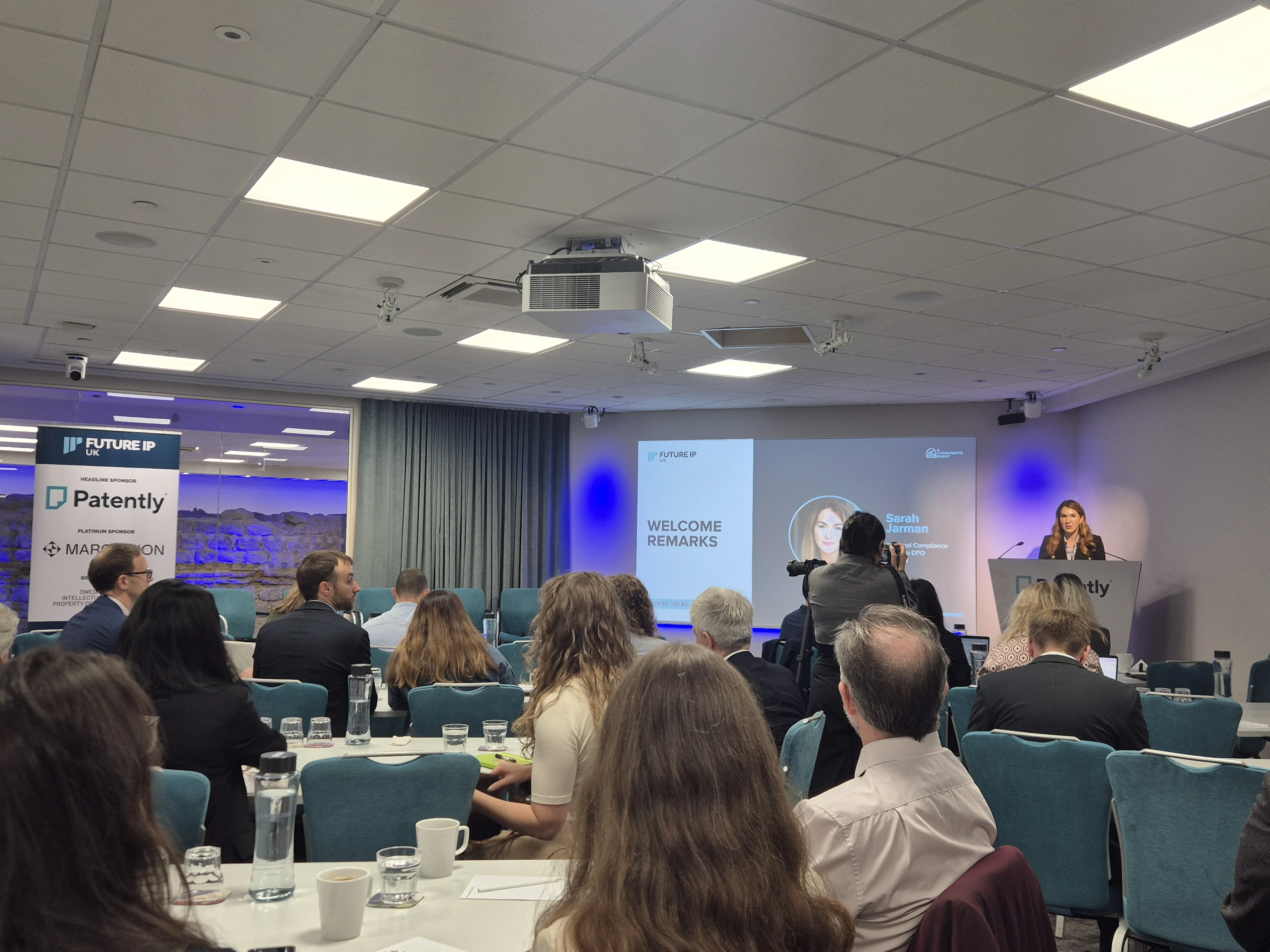
Solve Intelligence at IPO Annual Meeting 2025We are thrilled to announce our attendance at the IPO Annual Meeting 2025 — where leading practitioners come together to explore the evolving role of IP in global innovation.
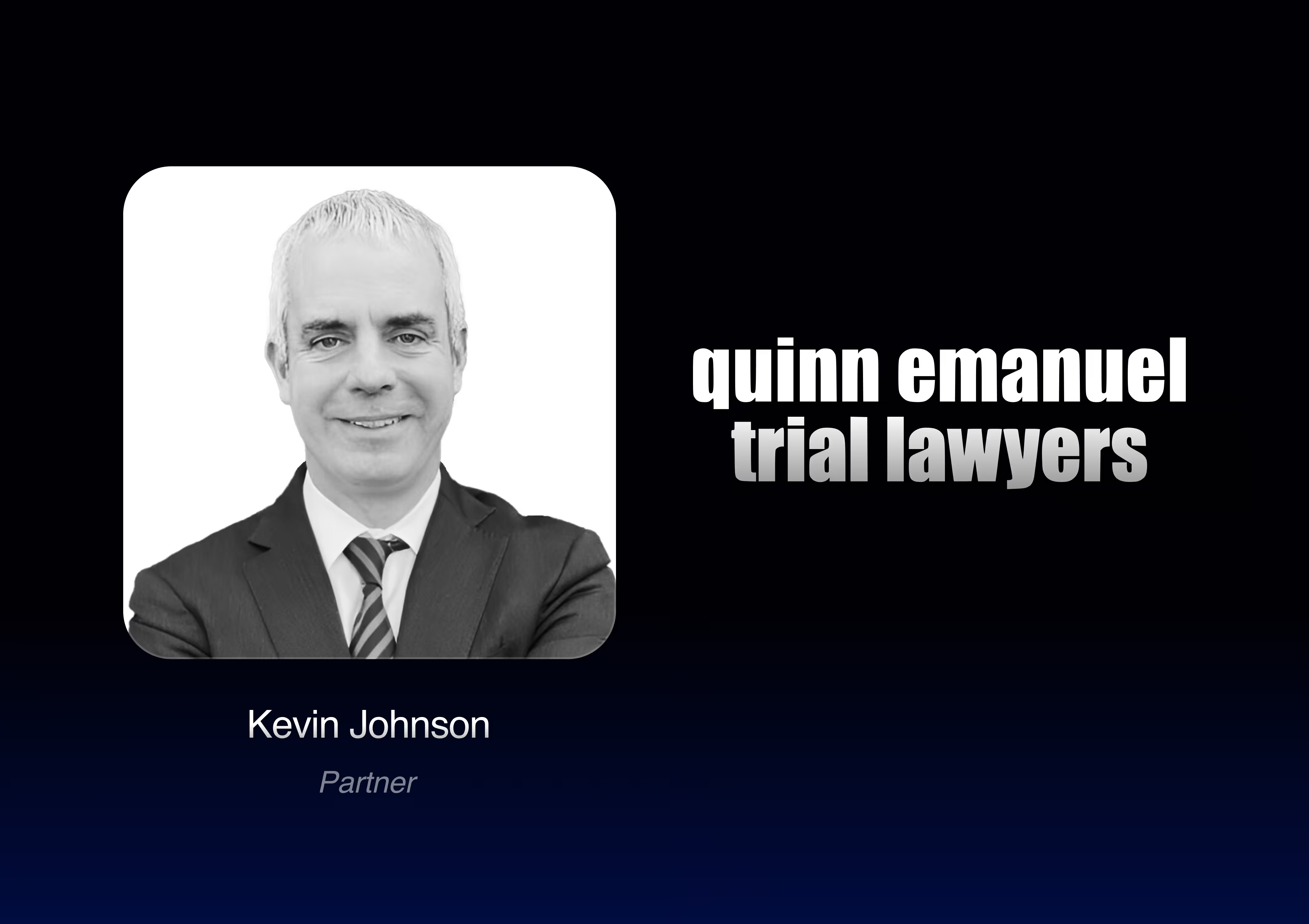
Kevin Johnson to join Solve Intelligence’s Customer Advisory BoardWe’re excited to welcome Kevin Johnson, partner at Quinn Emanuel, to Solve Intelligence’s Customer Advisory Board.
Jeff Draeger to join Solve Intelligence’s Customer Advisory BoardWe are excited to welcome Jeff Draeger, Director of Intel’s Patent Group, to Solve Intelligence’s Customer Advisory Board.
USPTO Memo: Reminders for AI & Software InventionsOn August 4, 2025, the USPTO issued a memorandum to software-related art units about subject matter eligibility for AI and computer-implemented claims under 35 U.S.C. § 101. The memo emphasizes that it "is not intended to announce any new USPTO practice or procedure and is meant to be consistent with existing USPTO guidance". This memo builds on and refers to previous July 2024 AI guidance . That guidance provided new examples and analytical frameworks for examining AI inventions. This memo attempts to ensure those frameworks are consistently applied across art units. The memo addresses four areas where examiners often lack consistency when applying the Alice/Mayo steps : mental process analysis, distinguishing claims that recite versus involve judicial exceptions, analyzing claims as a whole, and determining when rejections are appropriate.
Best 6 AI Patent Drafting and Patent Prosecution Tools in 2026The process of patent drafting, from drafting applications to responding to office actions, can be time-consuming and intricate. Fortunately, AI tools have emerged as game-changers for patent professionals, simplifying the process and improving accuracy. In this article, we’ll explore the top AI patent drafting tools and highlight key features, benefits, and how these tools are reshaping the patenting landscape. Key Takeaways AI patent drafting tools in 2026 deliver end-to-end support, from analyzing invention disclosure to generating the specification. These tools increase efficiency, accuracy, and focus on best practice while reducing the time and cost of patent preparation. Solve Intelligence’s Patent Drafting Copilot offers jurisdiction-specific, technology-specific, and user-specific customization for highly tailored application drafting. Investing in advanced patent drafting tools is essential for staying competitive and meeting client expectations in a rapidly evolving IP landscape.
Harm van der Heijden joins Solve's Customer Advisory BoardWe are excited to welcome Harm van Heijden, a partner at NLO, to Solve Intelligence’s Customer Advisory Board.
EPI’s Podcast on How AI is Transforming Patent PracticeIn a recent conversation between leading European patent attorneys, they confirmed what many of us were experiencing firsthand: AI has moved beyond the hype to become an essential tool that elevates both strategic capabilities and operational efficiency for patent practitioners. The evidence is compelling and the transformation is accelerating. Listen to the full podcast here .
AI Patent Protection in Europe: Strategic Insights for 2025The intersection of artificial intelligence and European patent law has reached a critical juncture. As AI technologies mature from experimental tools to production-ready solutions, patent professionals face unprecedented challenges in securing robust IP protection. Recent developments from the Munich AI & IP Forum reveal both emerging opportunities and significant obstacles for companies seeking to patent AI innovations in Europe.
IPO European Committee Conference 2025: A Fireside Chat on IP and AIAt the European Practice Conference hosted by the IP Owners Association in Paris, one fireside chat stood out for its insight and urgency: “IP Trends and Developments in AI.” The session was led by two highly respected experts: Jean-François Adam, who covers all things European and currently serves as in-house counsel at Infineon Technologies, and Jonathan Osha, founding partner of Osha Bergman Watanabe & Burton LLP, who brought the US perspective. OBWB, a long-time thought leader in cross-border IP, was also the hosting sponsor of this year’s event, held at the elegant Hôtel le Marois in central Paris. Together, Jean-François and Jonathan offered a compelling look into the evolving challenges of patenting artificial intelligence-based inventions – and why practitioners on both sides of the Atlantic are grappling with inconsistent, outdated frameworks that do not sufficiently reflect the reality of modern innovation implementing AI.
G1/23: Marketed Products Are Prior ArtThe Enlarged Board of Appeal issued its decision in G1/23 on July 2, 2025, addressing whether products put on the market before a patent filing date form part of the prior art when their composition or internal structure cannot be reproduced by the skilled person.
AI Claim Charting - Patent ProsecutionPatent prosecution has always hinged on precision, speed, and strategic foresight. Yet as Office Actions grow in both volume and complexity, often bundling multiple §§102 (novelty) and 103 (obviousness) rejections grounded in nuanced claim interpretations and an ever-expanding body of prior art, the traditional toolkit of the patent professional faces serious challenges. Manual claim charting, painstaking annotation of cited references, and labor‑intensive crafting of responses under tight deadlines can create bottlenecks, drive up costs, and leave room for human error. Enter AI-powered claim charting: a suite of advanced natural language processing (NLP), machine‑learning (ML), and knowledge‑representation technologies that is rapidly reinventing each step of the Office Action workflow. By automating the generation of claim charts, surfacing hidden flaws in Examiner rejections, semantically analyzing claim language, and even proposing targeted response strategies, AI tools are transforming how attorneys and agents prosecute patents. In this post, we’ll explore four core capabilities of AI‑driven claim charting and how they bring both speed and insight to Office Action responses: Automated analysis of Examiner rejections Instant flagging of issues and gaps Holistic assessment of claim language and prior art AI‑generated response strategies
The 5 Best Patent Proofreading Software Solutions for Law Firms (2026)Key Takeaways Proofreading software has become essential: Manual checks can’t keep pace with growing patent complexity and filing volumes. AI solutions can help prevent costly errors, office actions, and post-grant risks. Most legacy solutions fall short of quality control: Many platforms rely on basic rule-based checks, lack real-time drafting integration, and offer limited jurisdictional support, creating workflow gaps and added manual work. Solve Intelligence for AI-assisted patent review: With seamless drafting integration, tracked changes, auto-propagation of edits, and multi-jurisdiction compliance, Solve Intelligence provides unmatched accuracy and efficiency.
G 1/24 Decision: EPO Clarifies Claim InterpretationThe Enlarged Board of Appeal issued its decision in case G 1/24 on 18 June 2025, concluding that " The description and drawings shall always be consulted to interpret the claims when assessing the patentability of an invention under Articles 52 to 57 EPC, and not only if the person skilled in the art finds a claim to be unclear or ambiguous when read in isolation. "
Prior Art Search: 7 AI Tools Ranked for Patent ProfessionalsDiscover 7 top AI tools for smarter prior art search, ranked and reviewed for patent professionals seeking innovation and accuracy
Considerations for AI-Assisted Patent Proofreading and ReviewSolving the pain points of patent document review Patent proofreading and review tools are specialised to detect grammar, formatting, and structural issues in patent applications and related documents. With AI, these tools have also become beneficial in analysing claim structure, verifying aspects that require jurisdictional compliance, and maintaining consistency and support across the specification, claims, and formal drawings. AI tools are able to identify nuanced semantic and structural issues that human reviewers often overlook. And for firms managing large portfolios, this reduces attorney time, unnecessary rejections, shortens prosecution timelines, and delivers tangible ROI. If tailored to specific jurisdictions like the USPTO and EPO, they can also incorporate jurisdictional-related requirements and guidelines that reduces costly amendments and foreign attorney fees, reducing the risk of post-filing objections.
Patent Attorneys, AI, and the Skills Gap: Insights from AIPLA Spring MeetingAs artificial intelligence (AI) continues to evolve the legal profession, patent attorneys find themselves at a critical inflection point. While generative AI tools are becoming ubiquitous in day-to-day tasks, replacing Google Search for many, the patent space presents unique challenges, particularly around precision, consistency, as well as professional and educated judgment. From AI-assisted claim drafting to the future of inventorship and evolving legal standards under §101 and §112, this year’s AIPLA Spring Meeting in Minneapolis spotlighted the pressing issues shaping patent law in the age of generative tools. In AIPLA’s closing plenary - Integrating AI in your Practice to Innovate, to assist and to survive the Changing Legal Landscape - these challenges were brought into focus by Michael Atlass (Sr. Director & Legal Counsel, Qualcomm), Ian Clouse (Partner, Holland and Hart), John McBroom (Open Technology Counsel, IBM), and Ben Siders (Practice Group Leader, Lewis Rice), revealing clear opportunities for patent practitioners. AI adoption often seems daunting, but with Solve Intelligence, it doesn’t have to be. Attorneys can start using the platform right away - no need to change existing workflows .
Solve Intelligence is Exhibiting at the AIPLA Spring Meeting 2025 We’re excited to share that Solve Intelligence will be exhibiting at the AIPLA Spring Meeting 2025, taking place May 13–15 in Minneapolis! The AIPLA Spring Meeting brings together proven IP leaders, strategists, practitioners and peers. Many of them are judges; others are well-respected industry leaders who know what you need to know. We’re proud to be joining the conversation and showcasing how AI for patents can transform the way patent professionals work.
Cookie settingsBy clicking “Accept all”, you agree to the storing of cookies on your device to enhance site navigation, analyze site usage, and assist in our marketing efforts. For further details see ourManage cookie preferencesChoose which cookies we may store on your device. Essentials keep the site working and cannot be turned off.EssentialsNecessary for the site to function. Always on.Always activeAnalyticsMeasures usage and improves your experience.MarketingUsed for targeted advertising.Cookie preferences