The application of AI in patent drawing software is built on a combination of several technologies: machine learning (ML), computer vision, and natural language processing (NLP). These systems analyze inputs such as text descriptions, diagrams, or CAD models and assist in the generation of accurate, professional-quality patent figures.
Here’s how it typically works:
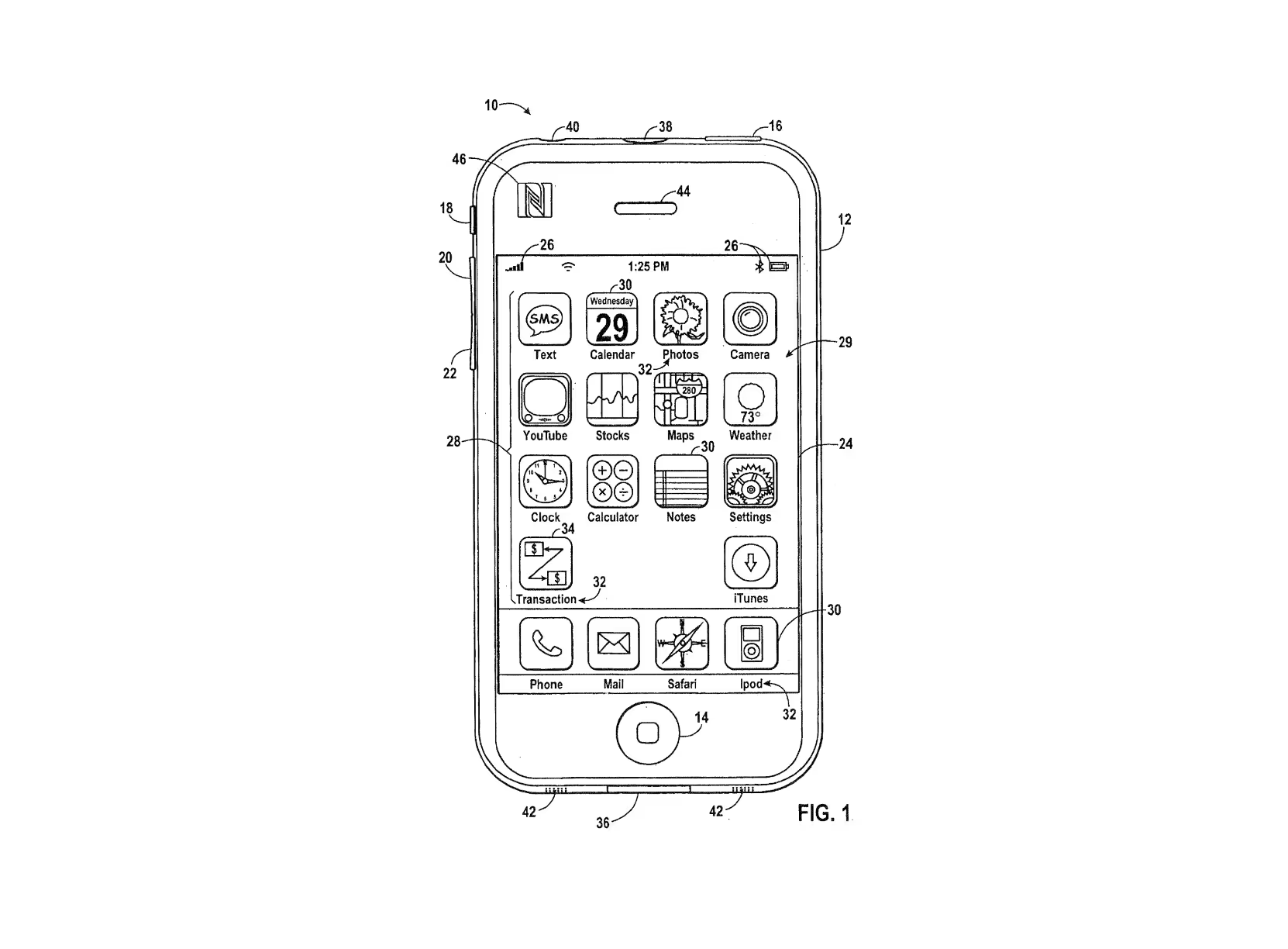
Image Recognition and Generation: AI-powered tools can interpret input images, technical sketches, or even 3D models to create patent-compliant figures. These systems leverage computer vision, which allows the AI to “understand” the structure of an image, automatically generate line drawings, and ensure elements are presented clearly and consistently.
As these technologies continue to evolve, we can expect patent figure tools to become even more intelligent, capable of greater autonomy in drafting and labeling, and offering higher levels of customization for inventors.
The integration of AI into patent figure generation promises to revolutionize the process for inventors, patent attorneys, and IP professionals alike. The following are some of the most significant benefits of AI patent figure tools:
One of the most time-consuming aspects of the patent application process is the creation of detailed, accurate patent figures. These drawings need to be precise, well-labeled, and compliant with a host of jurisdiction-specific rules. Traditionally, this process could take days or even weeks, depending on the complexity of the invention.
By leveraging AI tools for patent figure drafting, this time can be cut down drastically. AI systems can generate high-quality figures in a matter of minutes, offering users a much faster turnaround time. This allows inventors and IP professionals to focus on other critical aspects of the patent process, such as writing claims or preparing technical documentation.
Hiring a professional illustrator to create patent figures can be expensive, especially for complex inventions that require detailed drawings. Additionally, if errors or non-compliance are found in a patent figure, the process must be repeated, leading to additional costs.
AI patent figure tools offer a cost-effective alternative. By automating much of the drafting process, AI reduces the need for manual labor, lowering the overall cost of preparing a patent application. As the technology becomes more widespread, it is likely to become an indispensable tool for independent inventors and small businesses, allowing them to produce patent figures without breaking the bank.
Creating patent figures is not just about drawing a picture of the invention. The figures must adhere to strict rules set by patent offices, which dictate everything from the thickness of lines to the arrangement of labels. Failing to comply with these rules can result in the rejection of the entire application.
AI systems are programmed to understand these rules, ensuring that every figure they generate is compliant with the relevant guidelines. This significantly reduces the risk of errors and rejection, saving both time and money. Features like AI-generated figure element labels automatically assign and position labels according to the rules of the patent office, eliminating one of the most common sources of mistakes.
Patent figure drafting has historically been a highly specialized skill, requiring years of experience to master. However, AI patent figure tools democratize access to this capability. Inventors with little to no experience in technical drawing can now use AI to generate professional-quality figures with ease.
The result is a more accessible patent application process, where even individual inventors or small businesses can create and submit patent figures without relying on expensive professional services. As these tools continue to develop, we can expect even more intuitive interfaces and user-friendly features.
Looking forward, the next generation of AI patent figure tools will likely incorporate even more advanced capabilities, providing users with powerful new ways to generate and customize patent drawings. Here are some of the key features we expect to see in the near future:
One of the most exciting possibilities for the future of AI in patent drafting is the ability to automatically generate patent figures from textual descriptions. Using natural language processing (NLP), AI tools could take a technical description, such as a patent claim, and generate a corresponding figure that accurately represents the invention.
This would significantly streamline the drafting process, allowing inventors to focus on the technical description without worrying about the visual representation. AI could take care of the rest, generating detailed, compliant figures automatically.
As patent rules and regulations evolve, keeping up with the latest standards can be a challenge. Future patent drafting tools could incorporate real-time compliance checking, ensuring that every figure generated is up-to-date with current guidelines from patent offices around the world.
Such systems could also alert users to potential issues, such as missing labels, improper scaling, or incorrect line thicknesses, providing suggestions for corrections. This would further reduce the risk of rejection and save time by addressing compliance issues early in the drafting process.
While AI can automate much of the patent drafting process, every invention is unique, and different industries have specific needs. The next generation of AI patent figure tools will likely offer customizable templates tailored to different industries, from mechanical engineering to biotechnology.
These templates could provide a starting point for figure creation, making it easier to generate drawings that meet the particular requirements of each field. Users would then be able to customize the figures as needed, ensuring that their invention is represented as accurately as possible.
As AI-driven tools continue to evolve, we can expect greater integration with broader patent management and filing systems. Future tools could provide a seamless workflow, from drafting patent figures to filing the application with the relevant patent office. This integration would save time and reduce the administrative burden on patent professionals.
As we look to the future, it is clear that AI has the potential to reshape the entire patent drafting process. AI patent figure generation offers a faster, more efficient, and cost-effective way to create the visual components of a patent application while reducing the risk of errors and rejection.
The ongoing evolution of AI patent figure tools promises even more exciting possibilities, from automated figure generation based on text descriptions to real-time compliance checking and industry-specific solutions. These advancements will make the patent process more accessible, not just for large corporations but also for individual inventors and small businesses.
Ultimately, the rise of AI tools for patent figure drafting represents a major leap forward for intellectual property professionals. By embracing these technologies, the patent process will become more streamlined, accurate, and accessible, enabling innovators to protect their inventions more efficiently and effectively.
Here at Solve Intelligence, we are committed to building AI-powered platforms that assist with every aspect of the patenting process while keeping patent professionals at the helm of these powerful tools. In this way, we give patent practitioners the control needed to reap AI's benefits while mitigating its associated challenges. Our Patent Copilot™ helps with patent drafting, patent filing, patent prosecution, office action analysis, patent portfolio strategy and management, and future patent infringement analyses. At each stage, our Patent Copilot™ works with the patent professional, keeping them in the driving seat, thereby equipping legal professionals, law firms, companies, and inventors with the tools to help develop the full scope of protection for their inventions.

.jpeg)