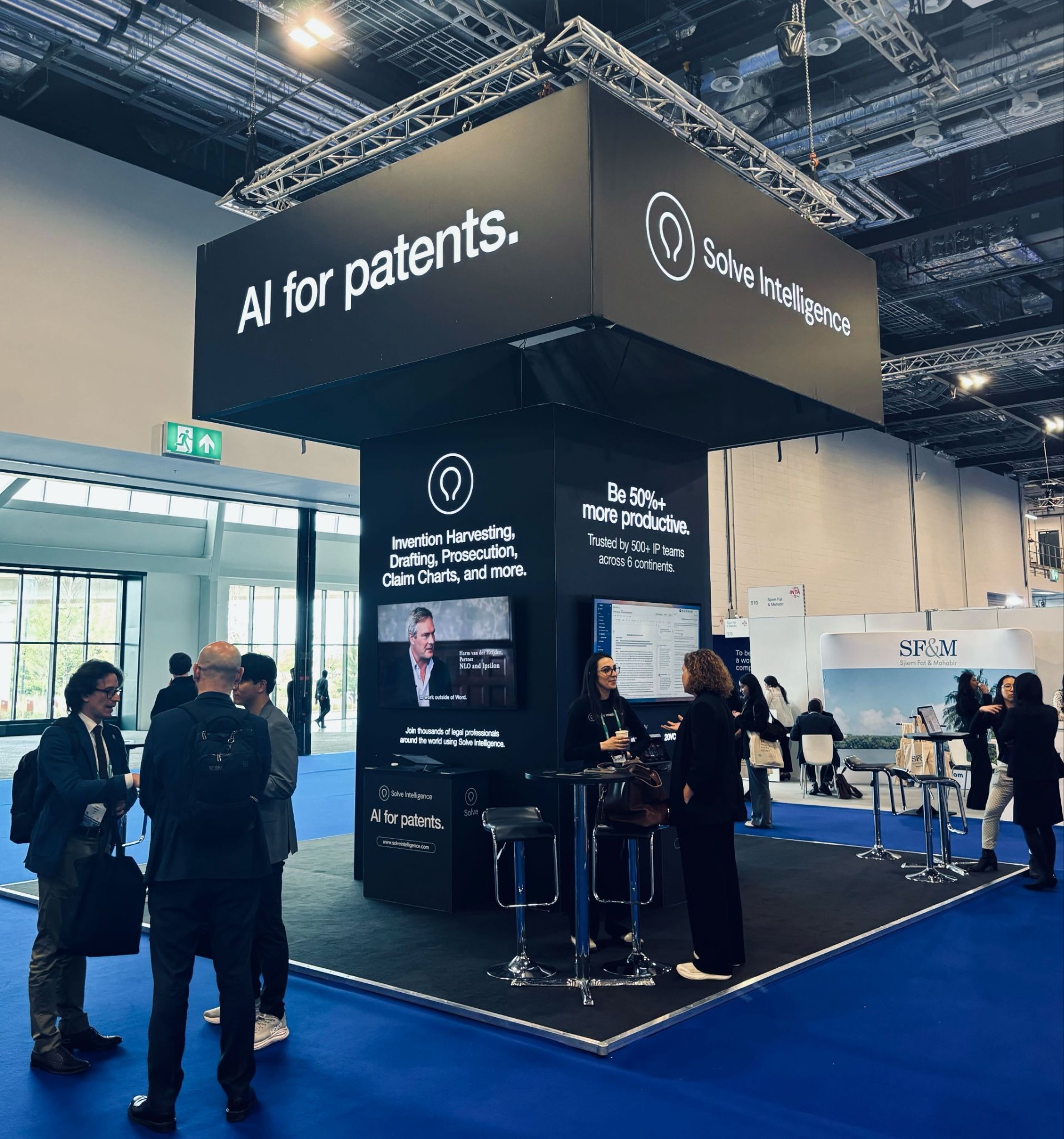
One of the most telling observations from the week wasn't a session topic or a keynote moment, it was the increase in patent attorneys, patent agents, and in-house patent counsel stopping by the Solve Intelligence booth and thinking about IP in a way that crossed traditional disciplinary lines. This was a notable shift and a strong signal of the future of the patent track at INTA.
From the Sunday general session,"Future Proofing: Skills and Strategies for a Tech-Driven IP World," to INTA CEO Etienne Sanz de Acedo's opening announcement of a new AI roadmap, AI was a theme that ran through virtually every session.
When the governing body of INTA formalizes an AI strategy from the opening stage it signals that AI is no longer peripheral to IP practice. AI is becoming foundational infrastructure for the profession itself.
Attendees are no longer asking whether AI belongs in IP practice, they are asking which tools are on the market, what expertise is building them, under what conditions, and with what safeguards in place. For Solve Intelligence, an AI-powered platform that was purpose built to support the full patent workflow, this shift felt significant.
A thread that ran through many conversations was that IP teams are actively investing in people who can evaluate, adopt, and govern AI tools in practice and the firms first to the market are the ones building a meaningful edge, especially with in-house teams leading this movement.
The Solve Intelligence team heard directly from in-house teams all week that they are not only hoping their outside counsel is keeping pace with AI, they are expecting them to lead. The firms that can demonstrate genuine technical fluency, not just awareness, are the ones building trust and winning work.
Giving patent professionals access to AI that understands the rigor of their work is the purpose of Solve Intelligence. The firms and in-house teams already working with platforms like Solve Intelligence are, more often than not, the ones leading the conversations at events like INTA.
INTA 2026 reinforced something Solve Intelligence already believes: the IP profession is evolving faster than many anticipated, and the practitioners leading that change deserve tools built specifically for their workflow.
The maturation of the AI conversation and the growing in-house expectation of technical leadership both point in the same direction. The Solve Intelligence team is heading back from INTA energized, with a clearer sense of where the market is going, and a refined list of features to add to our product roadmap.
For IP teams ready to lead rather than catch up, Solve Intelligence was built by patent attorneys and AI PhDs who understand the profession from the inside. That expertise is built into every part of the platform, from drafting to prosecution to claim charts, with the technicality and rigor the profession demands.
If you are interested in learning more, you can request a demo or get in touch with us directly at partnerships@solveintelligence.com.
What can patent professionals gain from participating in a traditionally trademark-focused conference like INTA?
For patent professionals, the crossover potential at INTA creates a unique opportunity to engage with a broader set of IP stakeholders, from in-house teams to global brand owners, at a scale that few other conferences match.
As clients begin demanding AI leadership from their outside counsel, how are teams equipping the team they already have?
The firms building a real edge right now aren't waiting for the market to force their hand, they're actively upskilling the teams they already have. That means giving attorneys hands-on access to purpose-built tools, not general-purpose AI tools repurposed for patent work. Technical fluency isn't developed through awareness alone; it's developed through practice, and the platforms attorneys work with every day are where that fluency is built.
If the next generation of IP professionals are expected to be technically fluent from day one, who is responsible for building that fluency? The firms hiring them, the platforms they work with, or both?
At Solve Intelligence, we think the answer is both, but it starts with the platforms. That's why we launched the Solve Intelligence for Higher Ed program, bringing the same professional-grade tools used in real-world patent practice into universities, law clinics, and tech transfer offices. The next generation shouldn't have to learn AI fluency on the job, they should arrive already equipped.


.avif)