Patent practice in Europe is split between the EPO and national offices. The EPO received a record 200,000+ applications in 2025. A single EPO application can be granted in 30+ states, and a single opposition can revoke them all at once. In parallel, European patent attorneys also handle a lot of work for national applications.
The DPMA alone takes almost 60,000 applications a year, all filed in German under national procedure. That's why building great products for European patent attorneys means understanding the different procedures and ways of working across the EPO and the national offices of its member states.
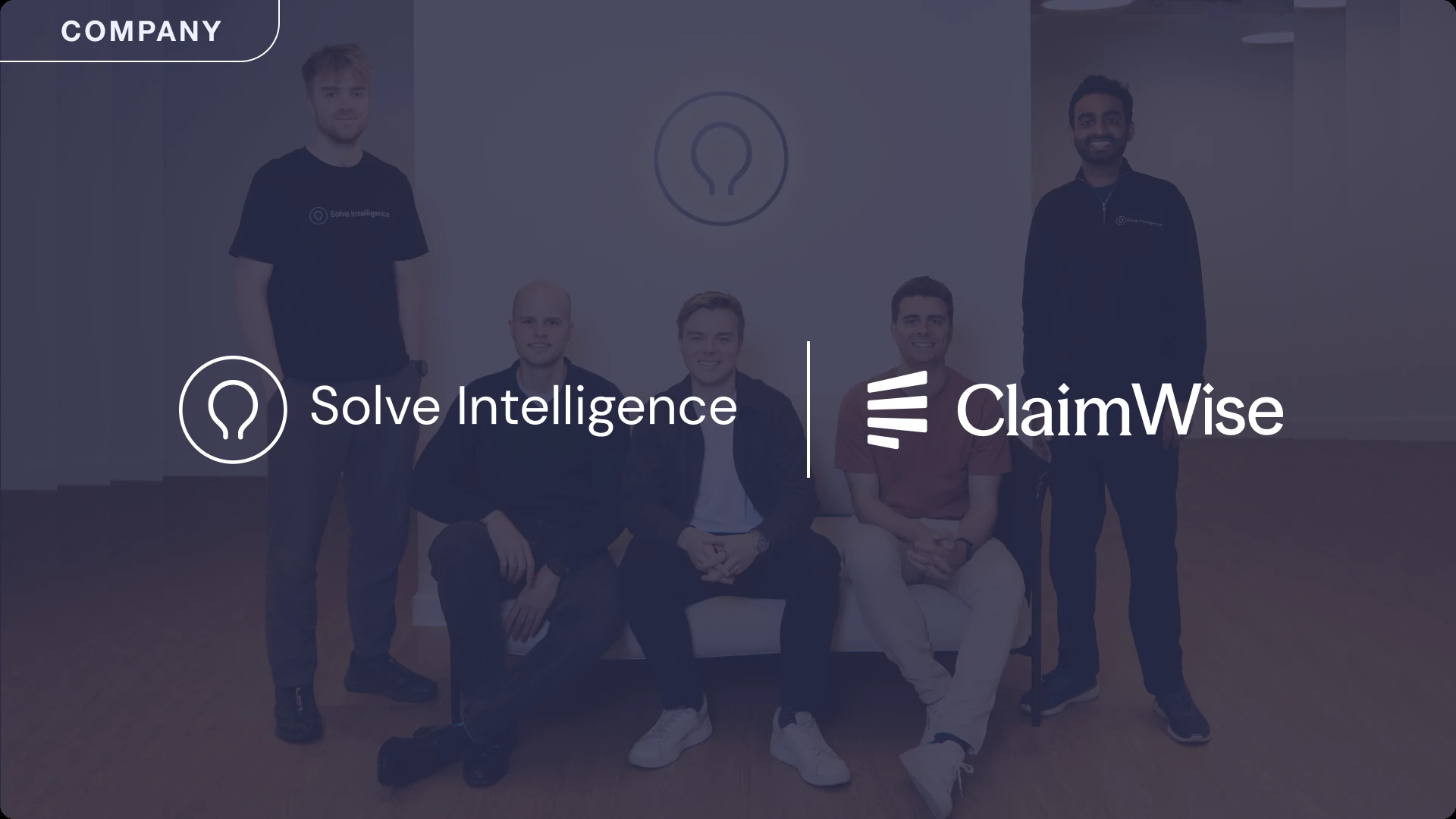
Solve Intelligence has always supported European workflows - we have a large team of European patent attorneys from different technical fields that help to shape our products with our engineers. A significant share of our European customer base, across major firms and in-house teams in many EPC jurisdictions, already rely on us for drafting, prosecution, opposition and litigation. ClaimWise extends that foundation.
“The US is our biggest market, but we have customers across 6 continents, and we are rapidly growing in Europe,” said Chris Parsonson, Founder and CEO of Solve Intelligence. “ClaimWise has built great technology for European patent drafting, prosecution, opposition and litigation workflows being used by over 50 IP teams across key markets like Germany and the Nordics. Bringing ClaimWise into the Solve platform means customers get deeper and more powerful tools for all European patent workflows.”
ClaimWise is used by 50+ private practice firms and in-house IP teams across the Nordics, Benelux, DACH, Italy, and Spain. Their customers and use cases reflect the variety of European patent work: teams drafting life sciences applications, boutique firms preparing search opinion responses for non-EU filers, in-house teams reviewing outside counsel work, generics manufacturers filing oppositions, and more.
For each customer, ClaimWise has been a partner rather than a tool. Years of close engagement taught the team how patent attorneys actually work across different fields of invention, firm types, and jurisdictions, and how AI fits into each.
"We spent a lot of time sitting next to patent attorneys, learning where AI helps and where it doesn't. Solve has been doing the same on a much larger scale, across the full patent lifecycle. Joining means the work we started reaches more attorneys, faster, and we get to keep building it with a team that thinks the same way about the craft."
Milo Moerkerke, Co-founder of ClaimWise
For Solve Intelligence customers, the acquisition means even more support across EPO workflows for our European customers, drawing on years of close work with European attorneys.
ClaimWise's DPMA integration will transfer directly to Solve Intelligence, alongside office action response and application drafting templates in the right language for each jurisdiction, and integration with office-specific case law. All of this will sit in one platform, covering the end-to-end lifecycle of patents, from drafting through to litigation. If you want to see what Solve Intelligence looks like across European drafting, prosecution, oppositions, and litigation, book a demo today.
1. What does this mean for existing Solve Intelligence customers?
Existing customers get expanded European patent support as part of their current subscription, with no action required. EPO and national-office workflows get deeper coverage, and ClaimWise's customer-tested approach to drafting, prosecution, and opposition feeds into the product roadmap.
2. How does ClaimWise integrate with the existing Solve Intelligence platform?
Over the coming months, ClaimWise is being merged directly into Solve rather than kept as a separate product. The DPMA integration, jurisdiction-specific templates, and office-specific case law become native parts of the Solve platform, so customers work in one system across drafting, prosecution, opposition, and litigation.
3. Does the acquisition change Solve Intelligence's roadmap for US workflows?
No. The US remains a large area of investment in the product roadmap, and that doesn't change with this acquisition. ClaimWise expands our European capabilities without redirecting resources from US workflows. Customers across the USPTO will continue to see ongoing investment in drafting, prosecution, opposition, and litigation support.