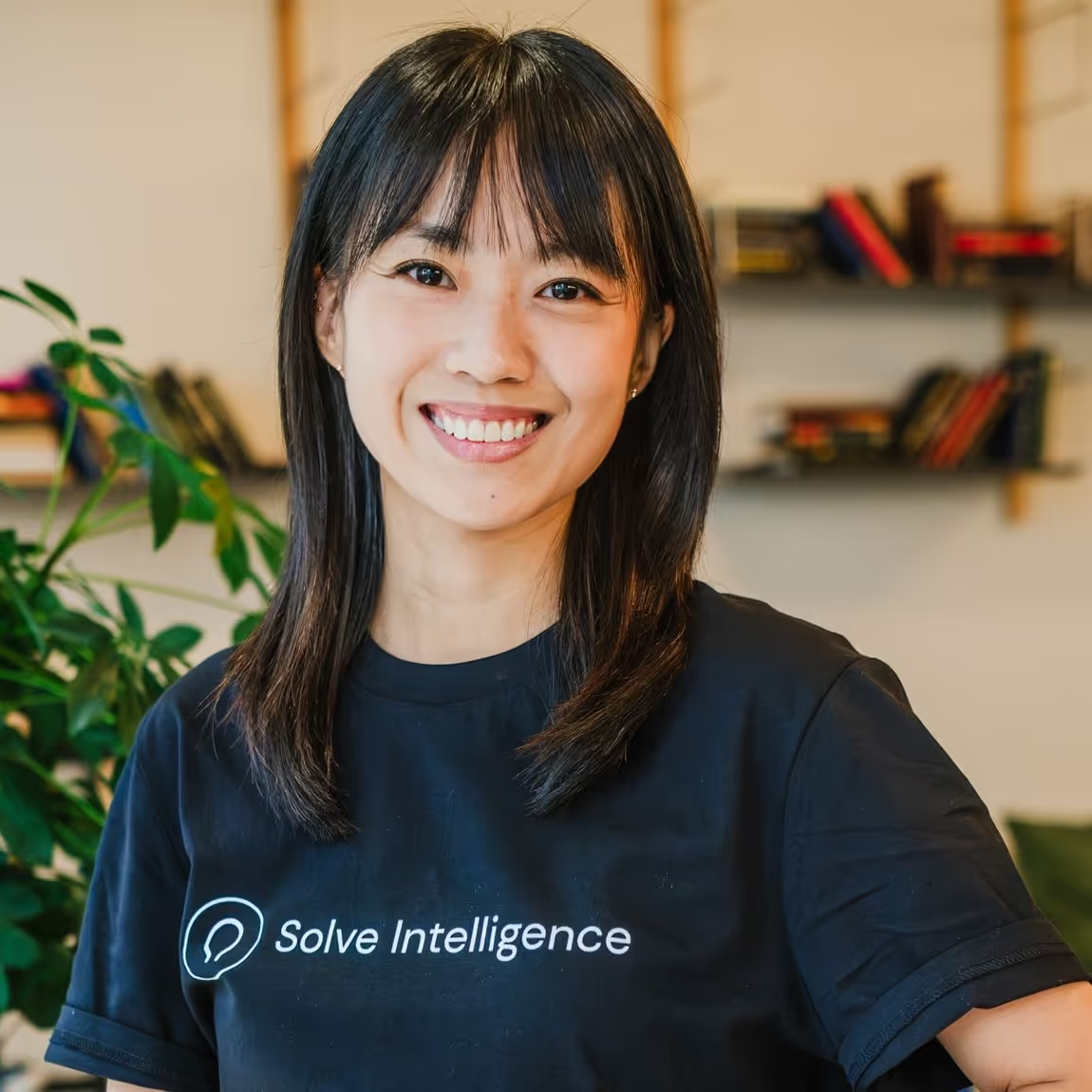
Harm van der Heijden joins Solve's Customer Advisory Board

We are excited to welcome Harm van Heijden, a partner at NLO, to Solve Intelligence’s Customer Advisory Board.

Harm van der Heijden joins Solve's Customer Advisory Board

Harm is a Dutch and European Patent Attorney and partner at NLO and Ipsilon, advising clients in patent matters related to electronics, communications technology, and software. He holds an MSc in Applied Physics and a PhD in Plasma Physics from Eindhoven University of Technology, and is also experienced as an industry researcher and developer in signal processing, medical devices, and integrated circuit design. His combined technical and legal expertise covers areas such as computers, telecommunications, electrical and mechanical engineering, and physics. In addition to drafting and prosecuting patents, he is also active in litigation and licensing.

“As AI is transforming the IP industry, it’s essential for patent attorneys to have a front row seat. That’s why I’m honoured and excited to join Solve Intelligence’s Customer Advisory Board. Great things are coming!”

Harm van der Heijden, Partner, NLO and Ipsilon

“Harm's deep expertise and enthusiasm for AI will be invaluable as we continue innovating and enhancing our product offerings for patent practitioners worldwide, particularly in Europe. He has already provided extensive feedback to help us tailor our solutions for European clients - this has enabled us to specialize our patent drafting tools to better serve all European customers, and adapt our prosecution product to meet specific EPO requirements. His experience with contentious litigation at the Hague, national and EPO proceedings, and licensing negotiations will further strengthen our future product development and accelerate our launches.”

Harry Bedford, Founding Member of Legal & Product and UK & European Patent Attorney, Solve Intelligence

Check out the rest of our Customer Advisory Board here.

AI for patents.

Be 50%+ more productive. Join thousands of legal professionals around the World using Solve’s Patent Copilot™ for drafting, prosecution, invention harvesting, and more.
Related articles

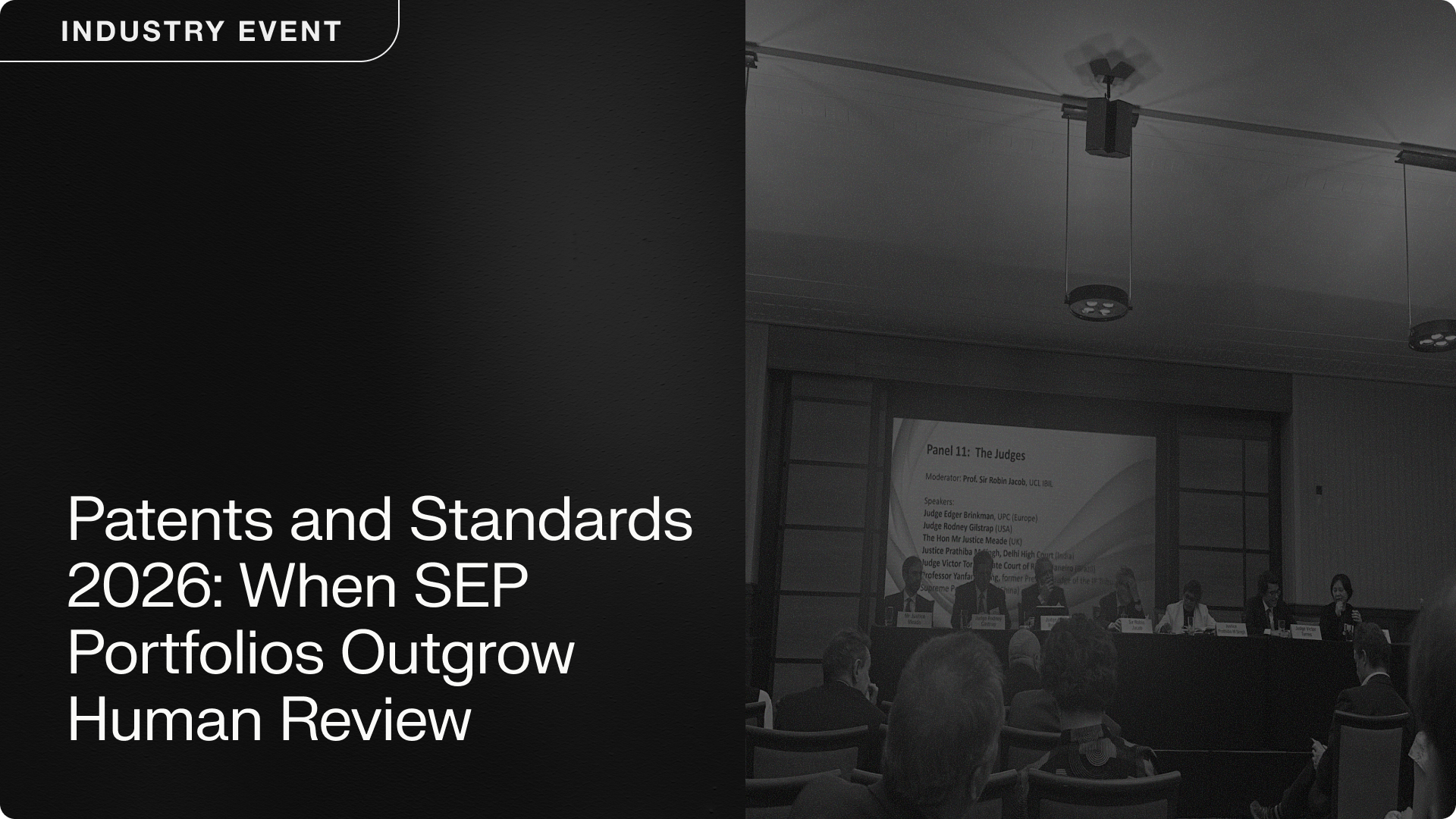
Patents and Standards 2026: When SEP portfolios outgrow human review

The 8th UCL Patents and Standards conference brought together all the key standard essential patent (SEP) players on both the holder and implementer sides. 

By the end of day two, one technical question kept resurfacing across panels that were nominally discussing other topics. How does anyone actually assess essentiality and validity at the scale modern declared portfolios now reach? At Solve Intelligence, this is the question we have built our platform to answer.

Key takeaways

  • At today's portfolio scales, AI is a precondition for SEP essentiality and validity assessment, not an enhancement of human review.
  • Streaming standards are fully in SEP territory, bringing implementers with no licensing history into the same mapping problems as in cellular standards.
  • SEP disputes default to parallel multi-jurisdiction proceedings, requiring position alignment across every forum before the first filing.

Why Patent Practice Needs Purpose-Built AI: Reflections from Code with Claude

Anthropic's Code with Claude convened the global community of developers, founders, and researchers building applied AI on Claude. Solve Intelligence was invited to speak from the stage on what we have learned building AI for patent professionals, and the conference was a useful reminder of why domain-specific software matters in high-stakes legal work.

Keunbong (KB) Do Joins Solve

We're delighted to welcome Keunbong (KB) Do to Solve Intelligence as our newest Legal and Product Engineer.

UPC Long-Arm Jurisdiction Is Reshaping European Patent Litigation

Three years in, the Unified Patent Court is no longer just a faster route through European patent litigation. It is becoming a single venue capable of resolving infringement across the UK, Switzerland, Turkey and Spain in one action. That shift has one source: the CJEU's BSH v Electrolux ruling, and what UPC divisions have done with it since February 2025.

The court has issued more than 1,800 decisions, with around 700 new actions a year and 31 already citing BSH. For teams navigating that volume across multiple jurisdictions, AI-assisted research platforms like Solve Intelligence exist for exactly this kind of work.