Validating AI Output in Patent Practice: Solve Intelligence at ABA-IPL 2026

The American Bar Association’s Intellectual Property Law Section Spring Conference (ABA-IPL) remains one of the premier annual gatherings for IP professionals, bringing together practitioners, in-house counsel, academics, and policymakers to explore the latest developments shaping the field. 

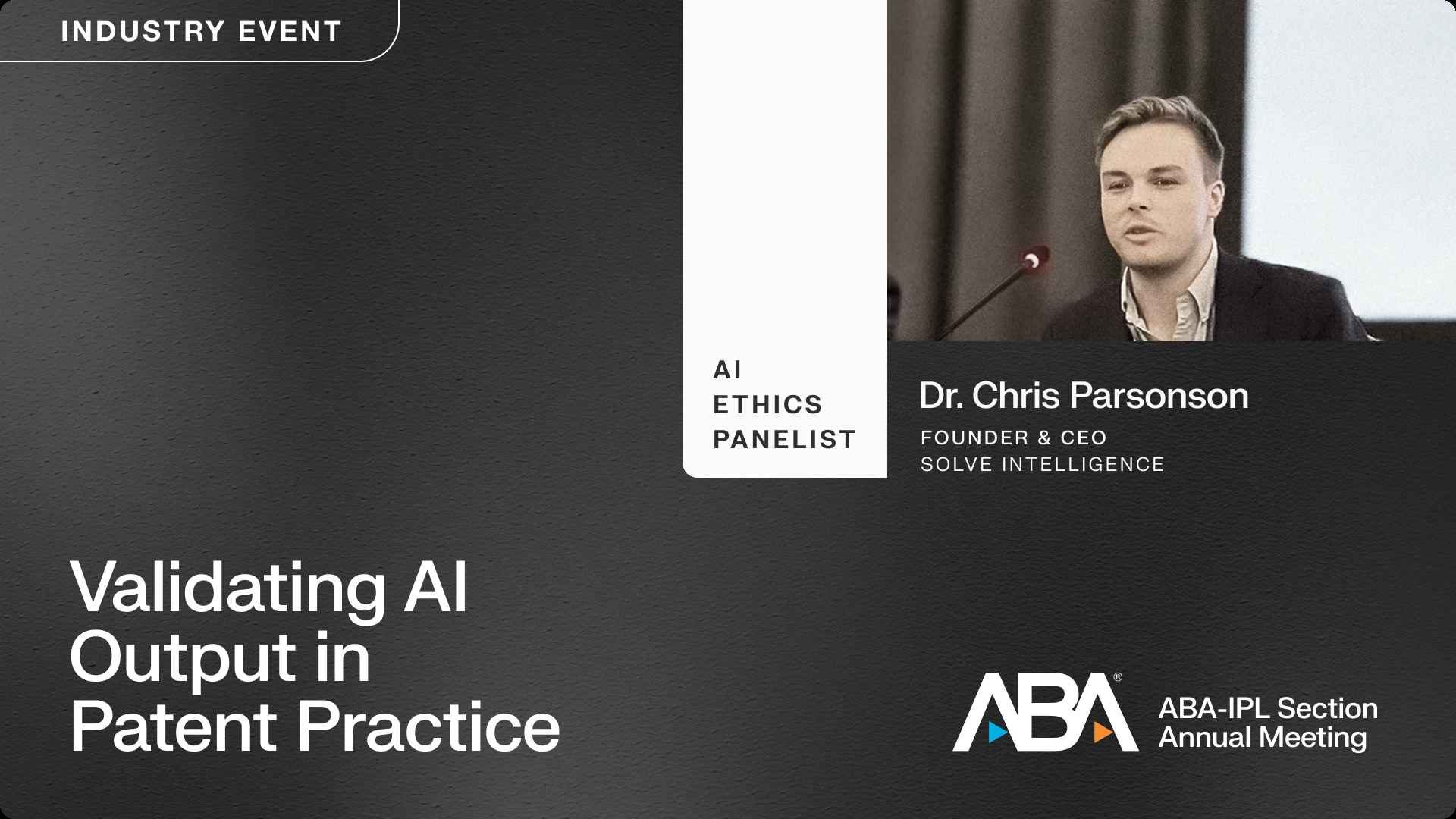
Solve Intelligence was invited not only to attend, but to share their expertise on the concluding panel as leaders in AI.

Validating AI Output in Patent Practice: Solve Intelligence at ABA-IPL 2026

Key insights

  • Generative tools produce probabilistic responses; even confident outputs can be wrong.
  • Every AI output needs review for hallucination, fabricated citations, and weak reasoning.
  • Document what you directed, what the model returned, and what you conceived independently.

Held in April 2026 in Washington, D.C., the conference featured a packed agenda of more than 20 Continuing Legal Education (CLE) sessions alongside networking events, keynote programming, and section business meetings. A central theme of this year’s conference was the rapid evolution of intellectual property law in response to emerging technologies, particularly artificial intelligence and data-driven innovation. 

One of these sessions was the hotly debated topic of AI at the intersection of IP and ethics. 

AI validation and ethics in patent practice

At this year's ABA-IPL "AI & Ethics Roundup," Chris Parsonson, CEO and co-founder of Solve Intelligence, joined Emil Ali (McCabe & Ali), Paul Morico (Baker Botts), and Tammy Pennington Rhodes (Supercharger AI) to discuss how patent practitioners should handle AI tool output across validity, infringement, and freedom-to-operate work.

Chris underscored two non-negotiables when integrating generative tools into any professional workflow:

Validate outputs thoroughly

Generative tools should not be taken just at face value. Instead, patent professionals should always confirm accuracy and independently verify any cited sources. Because these models generate responses probabilistically rather than retrieving information from a reliable database, even outputs that sound confident and authoritative can still be incorrect.

Apply critical, informed judgment

Every output should be reviewed for relevance, logical consistency, and overall credibility. This means actively looking for signs of hallucination, such as fabricated citations, claims that aren’t supported by the referenced material, or reasoning that doesn’t hold up under closer scrutiny.
USPTO guidance on AI-assisted inventorship

That same emphasis on human oversight ran through the panel's discussion of the November 2025 USPTO guidance on AI-assisted inventorship. The guidance treats AI systems as tools, analogous to lab equipment or research databases, and keeps conception as the touchstone: a natural person must possess the "definite and permanent idea of the complete and operative invention." 

A single human inventing with AI raises no joint inventorship question, since AI cannot be a joint inventor; when multiple humans collaborate using AI, the Pannu factors apply among the humans only. 

Relatedly, on the question of human inventorship, participants at the conference discussed the importance of having documentation to show what the human directed, what the model returned, and what the human conceived independently.

IP law in motion

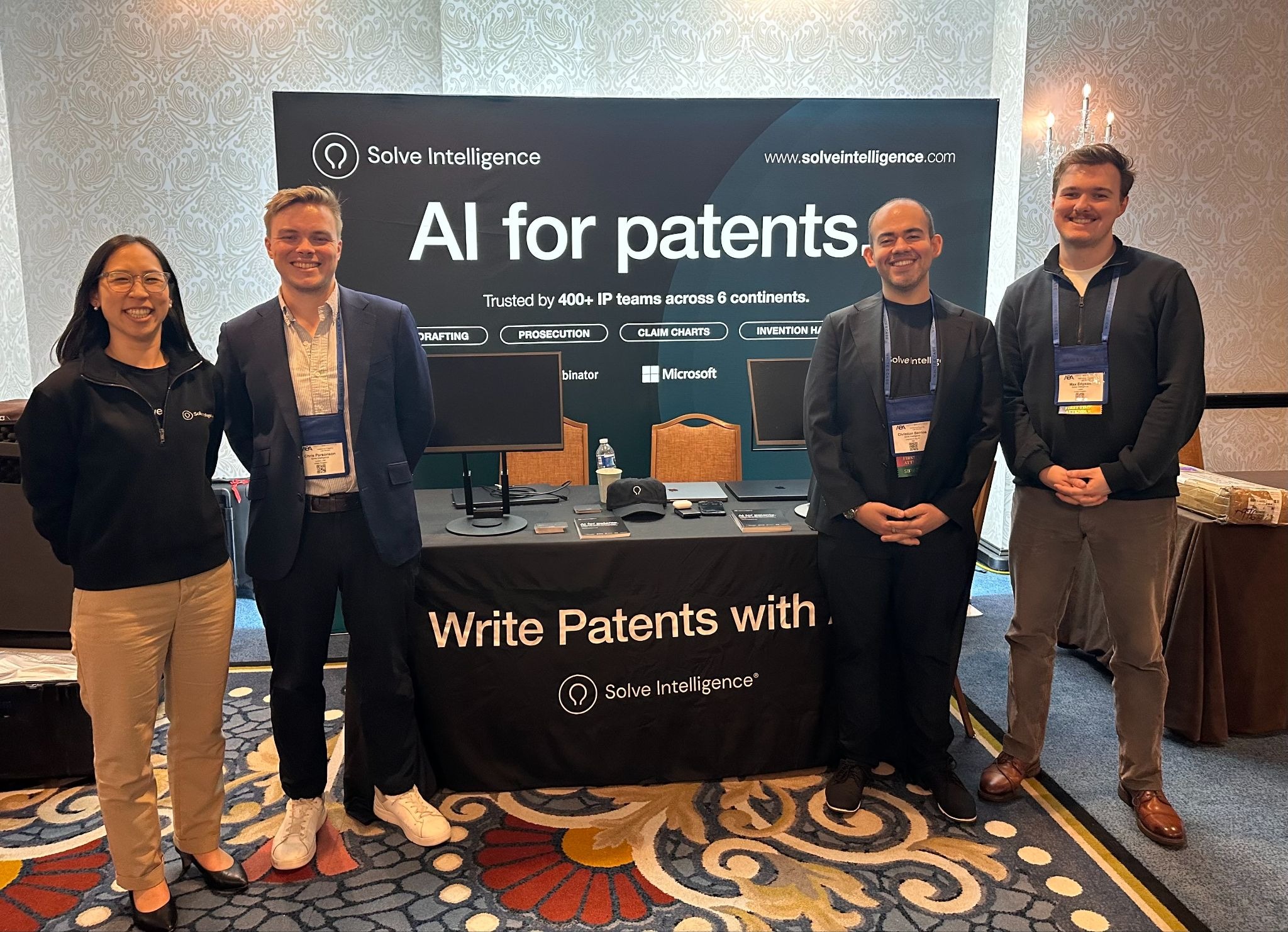
Beyond substantive programming, IPLSPRING emphasized community and collaboration. Attendees had ample opportunities to connect through networking sessions, sponsor showcases, and social events, reinforcing the conference’s role as a hub for relationship-building across the IP ecosystem. 

Overall, the ABA-IPL Spring Conference underscored both the dynamism and complexity of modern intellectual property law.

AI for patents.

Be 50%+ more productive. Join thousands of legal professionals around the World using Solve’s Patent Copilot™ for drafting, prosecution, invention harvesting, and more.

Related articles

Sughrue Mion Integrates Solve Intelligence into Patent Practice

Sughrue Mion has always set the standard for what patent prosecution looks like. Founded in 1957, the firm has obtained more U.S. patents than any other law firm in the world. That record is built on deep technical expertise, disciplined prosecution strategy, and a culture that takes the quality of every work product seriously.

When Sughrue decided to integrate AI into patent workflows for select clients, their approach reflected that culture. Sughrue thoughtfully structured its implementation, and demonstrated a clear vision of where technology and AI adds value and where attorney judgment remains irreplaceable.

Key Insights

  • Sughrue adopted Solve Intelligence's platform for certain clients across Drafting, Prosecution, and Charts following firm-wide testing, culminating in an enterprise partnership.
  • The rollout was driven by Firm leadership prioritising practitioner education and a structured implementation framework from day one.
  • Solve Intelligence is now integrated into numerous preparation and prosecution workflows, helping Sughrue's attorneys work faster, think more expansively, and deliver higher-quality outcomes for a global client base.

Solve Intelligence, Powered by Claude

At Solve Intelligence, we believe the future of intellectual property belongs to professionals who can combine deep legal expertise with the most capable AI available. That's why our platform is powered by Claude, and why we're expanding what's possible for patent professionals and inventors worldwide.

The Speed-Quality Trade-Off in UPC Provisional Measures

Preliminary injunctions, or “provisional measures” in Unified Patent Court (UPC) terminology, have become the most consequential procedural tool in European patent litigation. In under three years, the UPC has issued 63 decisions across 88 cases, with filings accelerating year on year. The analytical rigour courts demand has increased at precisely the moment timelines have compressed.

For patent teams on both sides, the procedural reality is stark: court-ready claim analysis that once took months must now be produced in days, at a depth that no longer rewards manual workflows.

Tools like Solve Intelligence’s Charts are emerging as a response to that structural pressure, compressing the mechanical phases of claim charting while preserving the practitioner-led judgment that courts expect.

Shumaker Leverages Solve Intelligence to Enhance Service for Intellectual Property Clients

Shumaker is reinforcing its commitment to innovation and client service with Solve Intelligence. By integrating Solve Intelligence, Shumaker is strengthening its ability to help clients move from invention to protection faster while maintaining the precision required for successful patent prosecution.

Solve Intelligence allows Shumaker’s IP lawyers to focus more on crafting strong claims, identifying potential risks, and aligning patent strategy with each client’s broader business objectives. As innovation accelerates across industries, companies are under increasing pressure to protect their IP quickly and effectively.

Patrick Horne, Partner and Intellectual Property National Service Line Leader at Shumaker, describes the value of Solve Intelligence. 

“Solve Intelligence provides our team with powerful tools that enhance the patent drafting process. This technology allows us to focus even more of our time on strategy, claim development, and protecting our clients’ innovations, while improving efficiency in the preparation of high-caliber patent applications.”