Solve Intelligence at AUTM 2026: Supporting the Tech Transfer Ecosystem

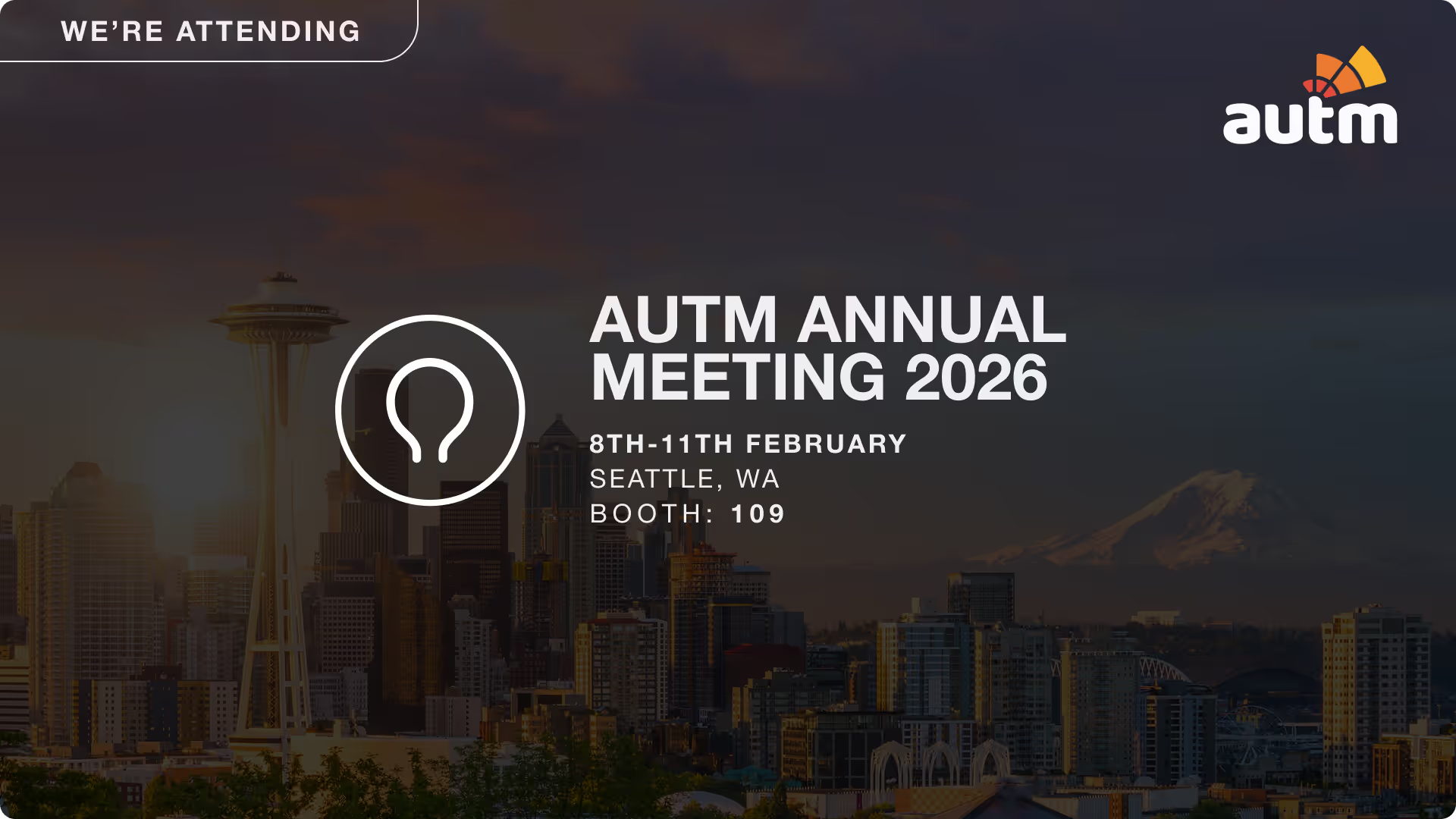
Solve Intelligence is proud to sponsor and attend the AUTM 2026 Annual Meeting in Seattle, February 8–11, 2026.

AUTM's Annual Meeting is the premier gathering for technology transfer professionals, bringing together university tech transfer offices (TTOs), research institutions, industry partners, and IP professionals to connect, share insights, and develop partnerships that bring innovations to the marketplace.

We're sponsoring AUTM 2026 because we believe AI has a critical role to play in accelerating tech transfer, and we're committed to supporting the professionals who make it happen.

Solve Intelligence at AUTM 2026: Supporting the Tech Transfer Ecosystem

Why Tech Transfer Matters

Universities and research institutions help shape indsutries from life sciences and medical devices to semiconductors and clean energy. But turning research into real-world impact requires a complex chain of IP protection, licensing negotiations, and commercialization strategy.

Tech transfer offices often sit at the centre of this process. They evaluate invention disclosures, coordinate with outside counsel on patent application filings, manage portfolios across jurisdictions, and conduct freedom-to-operate analyses in anticipation of licensing deals.

However, tech transfer teams are often under-resourced relative to the volume and complexity of innovations they manage. A single TTO may handle hundreds of invention disclosures annually, each requiring expert review, prior art assessment, and strategic decisions about patent protection and in/out licensing.

How Solve Intelligence Supports Tech Transfer

Solve Intelligence was built to help IP professionals work more efficiently without sacrificing quality. For tech transfer offices and outside counsels, this translates into practical capabilities across the patent lifecycle:

Invention Disclosure Enhancement: TTOs receive disclosures in varying formats and levels of detail. Solve's platform helps standardize and enrich disclosure forms, ensuring critical technical details are captured for future audit purposes or in preparation to engage outside counsel, reducing back-and-forth during the drafting process.

Patent Application Drafting: When TTOs work with external patent counsel, efficiency matters. Solve's Patent Drafting Copilot™ enables attorneys to draft complete specifications in a fraction of the time, with customizable templates that align with institutional preferences and jurisdictional requirements, supporting the standardization of quality across TTO portfolios.

Freedom-to-Operate and Clearance Analyses: Before licensing or spinning out a technology, TTOs need confidence that the innovation doesn't infringe third-party rights. Solve's Charts product generates structured FTO analyses with citations to source documents beign analysed, enabling faster and more thorough clearance reviews.

Prior Art and Invalidity Analysis: Whether defending the strength of a patent portfolio or assessing competitive landscapes, Solve helps teams map claim language to prior art disclosures efficiently, supporting licensing negotiations and portfolio valuation.

Why We're Sponsoring AUTM 2026

AUTM represents the professionals who bridge the gap between academic research and commercial innovation. Their work drives economic development, creates jobs, and brings life-changing technologies to market.

We're sponsoring AUTM 2026 because AI should be a tool that amplifies the impact of tech transfer professionals. At Solve Intelligence, we've built our platform with the security and confidentiality requirements that institutions demand, such as SOC 2 Type II certification, GDPR and CCPA compliance, ISO 42001 readiness, and zero data retention agreements with our LLM providers. No customer data is ever used for AI training or third-party monitoring. This level of security matters for TTOs managing sensitive pre-publication research and confidential licensing discussions.

Meet Us in Seattle

If you're attending AUTM 2026, we'd love the opportunity to connect. Whether you're exploring how AI can support your tech transfer workflows, evaluating tools for your institution, or simply want to exchange ideas about the future of IP and patent in commercialising research, our team will be exhibiting at Booth 109.

You can also schedule a meeting at partnerships@solveintelligence.com

We look forward to seeing you in Seattle.

AI for patents.

Be 50%+ more productive. Join thousands of legal professionals around the world using Solve’s Patent Copilot™ for drafting, prosecution, invention harvesting, and more.

Related articles

Automated Patent Proofreading: QA Framework for §112

The final review before a U.S. patent filing should not be another linear read-through. Rather, it should be a controlled quality-assurance step: a systematic check of the relationships among the claims, specification, and drawings while the full range of corrective options is still available.

Done well, pre-filing QA catches errors that are inexpensive to fix at the drafting desk but costly after filing. Done poorly, it can leave the applicant facing an avoidable rejection, a narrowing amendment, a priority problem, or a validity challenge years later.

Key Takeaways:

  • Pre-filing is the best time to correct disclosure, claim, and drawing defects without creating new-matter or priority complications.
  • Antecedent basis gaps, contradictory claim dependencies, and terminology drift are the most common pre-filing defects, and all are correctable before filing.
  • Section 112(a) review is substantive, not clerical: a broad range or functional limitation may warrant scrutiny even when the claim reads cleanly.
  • Automated patent proofreading identifies candidate defects for attorney review but does not substitute for legal judgment on claim scope, support, or strategy.

Solve Intelligence × iManage: Solve’s Patent Workflows and AI agents seamlessly integrated with your Firm’s Intelligence

Patent attorneys can now directly connect with iManage into Solve Intelligence’s platform, further streamlining your patent workflows.

The best patent applications are built from deep context. Claim sets that hold up, specifications that anticipate rejections and objections, arguments that resonate with examiners and legal and IP decisions that align with business and client needs. All of this depends on the attorney having the right materials at the right time. That's why we integrated Solve Intelligence directly with iManage.

iManage is where IP practices and firm intelligence lives. It's the document management platform trusted by thousands of legal organizations globally, where client disclosures land, where prosecution histories are stored, where the institutional knowledge of a firm accumulates over years. Now, that knowledge is directly accessible inside Solve.

How to Draft Patent Figures with Solve Intelligence

Solve’s Figure Builder is the integrated environment within the Solve platform where you can generate, edit, label and refine figures. It brings figures into the drafting process, alongside claim and specification drafting so consistency, and compliance with 37 CFR §1.84, is maintained across your application from the very first sketch to the version you file.

Key Takeaways:

  • Create, edit and finalize figures for your patent filings, both manually and with AI assistance.
  • Bring figure management into the heart of the drafting process to ensure you have the figures you need, when you need them.
  • Propagate changes in terminology and reference numerals across your whole application with ease.
  • Convert disclosure documents or claims into labelled line drawings in a single session, and then use them as the basis for your detailed description.

Bree Vculek Joins Solve

We're delighted to welcome Bree Vculek to Solve Intelligence as our newest Legal and Product Engineer.