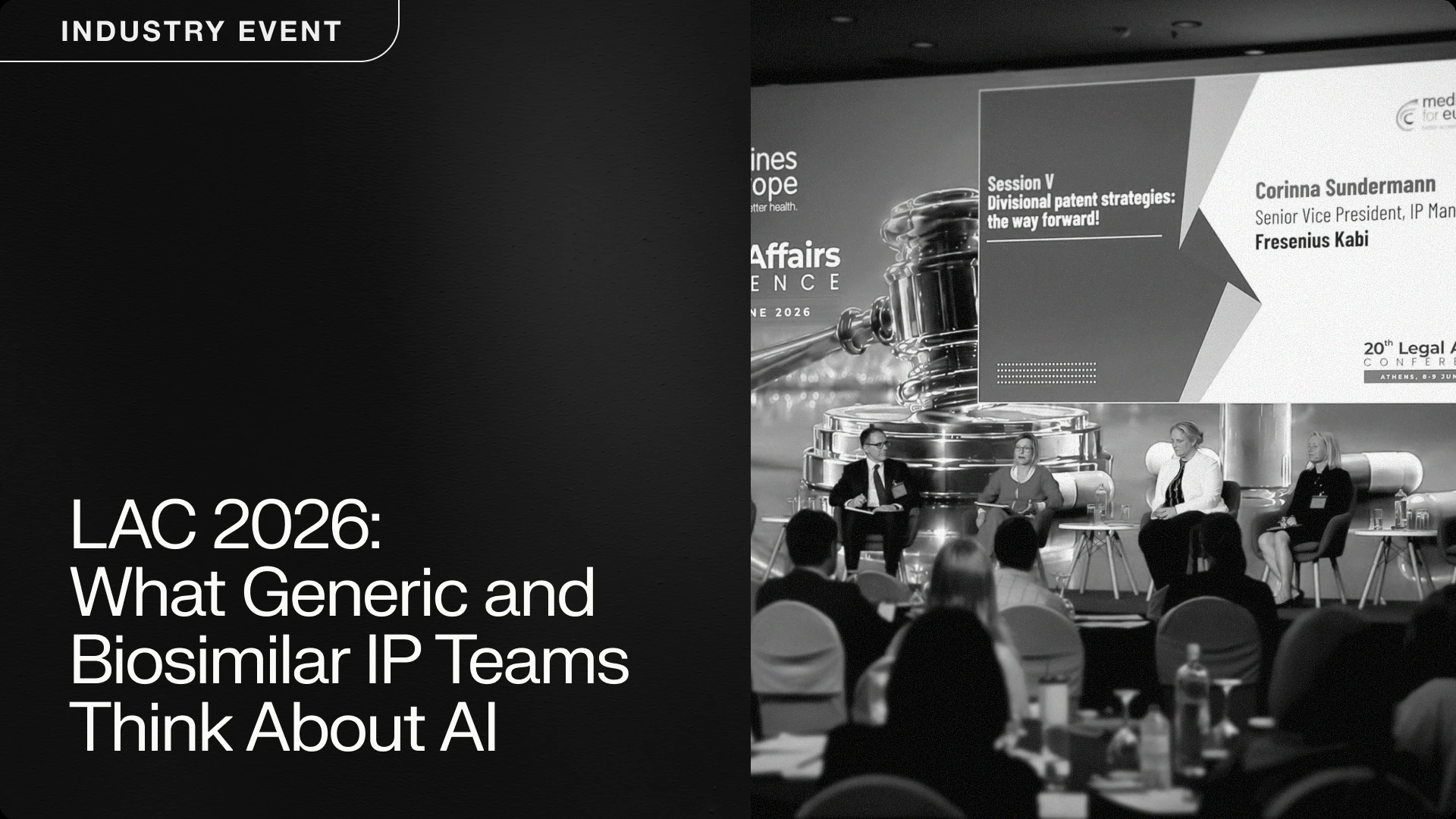
Medicines for Europe's Legal Affairs Conference brought together IP counsel, in-house legal directors, and patent attorneys from across the generics and biosimilar industry in Athens this June. The conference is now in its 20th year, and is one of the most substantive forums for European pharmaceutical IP practitioners.
The formal programme covered divisional strategies, the Biotech Act, SPCs, the UPC, and preliminary injunction law. AI did not appear on the agenda, however; AI was present in almost every conversation.
When a pharmaceutical company develops a new drug, it typically builds a portfolio of patents around it, covering the active compound, its formulations, manufacturing methods, and particular therapeutic uses. These patents can, in aggregate, extend effective exclusivity well beyond the primary compound patent, sometimes by many years. For a generic or biosimilar manufacturer, entering the market means navigating that entire landscape. This creates a distinctive kind of IP work as generic and biosimilar companies are not primarily filing patents. They are reading them.
Generic and biosimilar companies are:
The stakes are significant. A generic launch is a large commercial bet, and a preliminary injunction, even a temporary one, can significantly delay the process. Getting the patent analysis right, before launch, is not a back-office compliance task, it is a core strategy.
The UPC session centred on Boehringer v Zentiva (2025), a case that has quickly become required reading for anyone planning a generic launch in Europe. Boehringer sought a preliminary injunction against Zentiva's generic nintedanib (for idiopathic pulmonary fibrosis) before the patent expired. At first instance, the Lisbon Local Division declined as Zentiva had not yet taken the final steps to sell.
The Court of Appeal disagreed, finding that Zentiva had "set the stage" for infringement by completing regulatory pricing and reimbursement procedures more than a year ahead of patent expiry and the preliminary injunction was granted. The practical implication for generic IP teams is that clearance work needs to begin before the administrative groundwork for a launch even begins.
The competition policy and patent quality roundtable had a different energy. Heads of IP from generics and biosimilar companies discussed the EPO’s examination quality: specifically, how the EPO can ensure examiners have enough time for substantive review so that granted patents actually reflect what the prior art supports.
Better examination upstream reduces long post-grant challenges in either opposition or litigation proceedings at the source. What nobody in the room raised was that the EPO has already deployed AI tools aimed at giving examiners time back, through prior art search assistance, document classification, and workflow automation. Industry and the EPO are working toward the same goal from different directions, the conversation just has not fully connected yet.
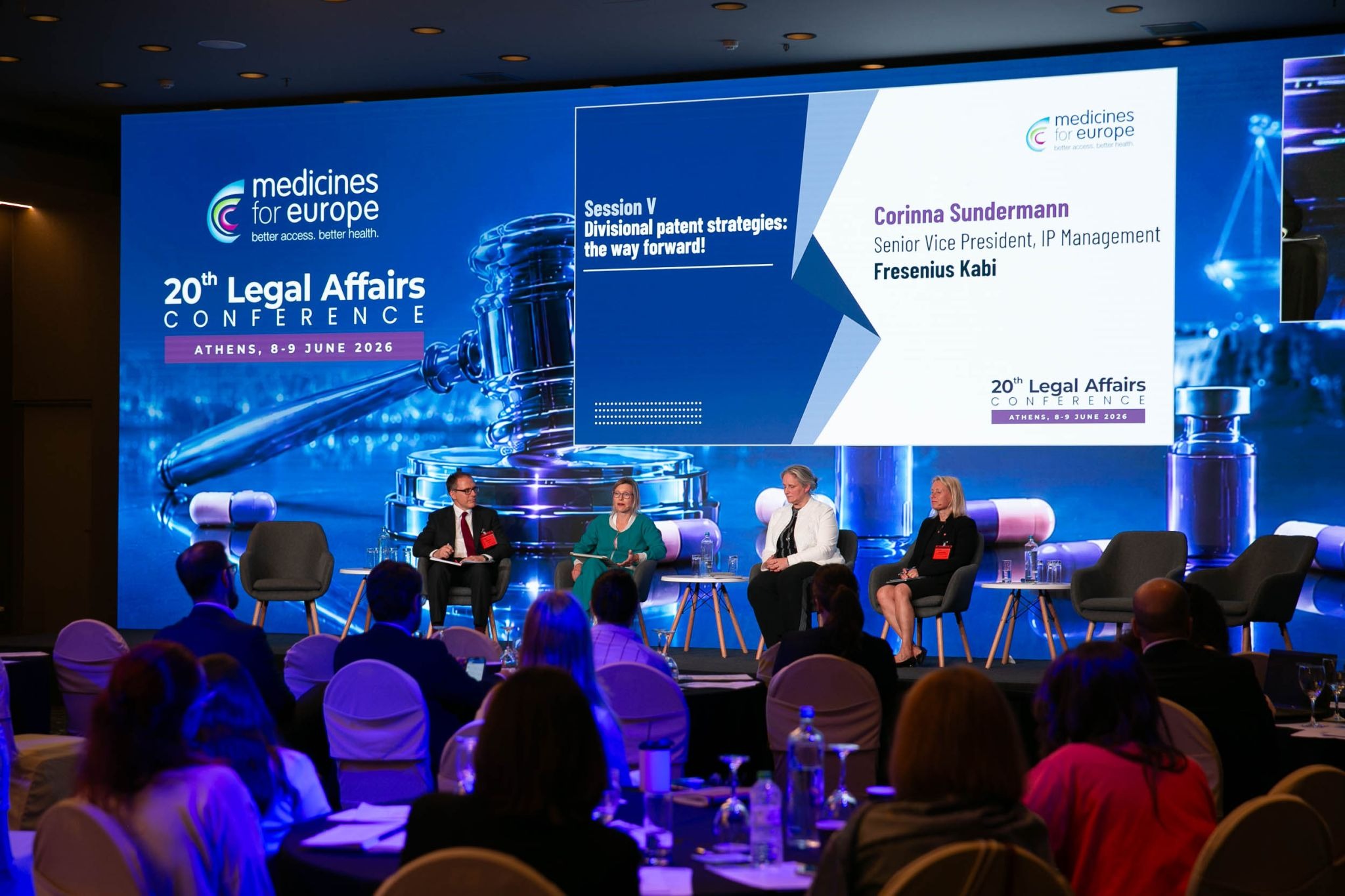
Most of the IP teams Solve spoke with are already using AI in some form. The question they are working through internally is not adoption, but value framing.
The use cases they described were consistent:
These are high-volume, high-stakes tasks where the analytical work is repeatable but the consequences of getting it wrong are significant. AI that can compress the time to produce a defensible prosecution history summary, or generate a first-pass FTO chart with cited clearance positions, has obvious value.
What was more interesting was the question sitting underneath the conversations we had while looking over the Acropolis, what do organisations and firms do with efficiency? Generic and biosimilar IP teams are often lean by design. When AI enables two attorneys to do the analytical work that previously required four, the internal business case looks different depending on whether it is presented as a headcount question or a quality and coverage question.
Several IP directors were clearly thinking carefully about how to frame internal conversations. Not because they were trying to hide the efficiency gains, but because the framing determines whether AI adoption is received as a threat or an upgrade.
The teams that seemed furthest along were the ones who were focused less on efficiency and more on quality. AI as a quality layer to check prosecution history interpretations, to ensure claim amendments are consistent with the disclosure, and to flag potential issues before they become litigation problems is a pitch that lands differently. It is also, frankly, a more accurate description of what good patent AI actually delivers.
One thread that came up in several conversations was the gap between general-purpose AI and tools built specifically for patent work. The concern is not that general AI is unintelligent. It is that it does not reliably understand the difference between what a claim says and what it covers, or why prosecution history matters to claim scope, or how to read a file wrapper for disclaimer. These are not obscure edge cases. They are the core of what patent analysis requires.
For teams doing FTO analysis on a patent that a generic manufacturer wants to design around, or reviewing prosecution history to understand whether a non-infringement argument is credible, that precision is the whole point. A tool that gets the general shape right but cannot be trusted at the level of specific claim language is not a tool you can rely on for decisions of this magnitude.
Solve Intelligence is built around exactly this kind of work: prosecution history analysis, claim charting, FTO and infringement mapping, with source citations at the cell level and legal texts integrated directly into the workflow. The teams working in the generic and biosimilar space are operating under the kind of constraints that make that precision matter.
Does regulatory preparation alone constitute imminent infringement under the UPC?
The practical implication of Boehringer v Zentiva is that clearance work needs to be completed earlier, and the analysis needs to be more thorough. AI-assisted prosecution history review and FTO charting (done at the right stage) is part of how teams manage their portfolio.
When AI enables a smaller team to do more analytical work, what is the right way to frame that value internally?
The teams building durable practices around AI are not framing AI as a cost reduction. They are framing AI tools as an extension of coverage. The ability to do more rigorous analysis, across a larger number of patents, with better documentation of the reasoning. That is a more accurate description of what the tools actually deliver, and a more defensible position, both internally and externally.
How do you evaluate whether a patent AI tool is actually trustworthy for high-stakes pharmaceutical work?
The right question is not whether it produces plausible output. It is whether it shows its work at the level of specificity that matters. For instance, does it cite the precise file wrapper passage that supports a claim interpretation? Does it identify the exact claim element that a product does or does not meet? At Solve Intelligence, source citations on a cell-by-cell level are not a feature, they are the baseline.