Reflections from AUTM: What Tech Transfer Offices Really Need in 2026

Last week, my colleagues and I attended the annual meeting of AUTM, the global association for technology transfer professionals. For anyone building in the intellectual property (IP) space, it’s one of the most important rooms you can be in.

The three-day conference brings together high education decision-makers from around the world who are shaping how intellectual property is evaluated, protected, and commercialized. This year’s conversations revealed something important: the question is no longer if AI will influence tech transfer, but instead about how institutions will integrate it.

Reflections from AUTM: What Tech Transfer Offices Really Need in 2026

As someone working at the intersection of AI and patents at Solve Intelligence, I arrived expecting tactical discussions about tools, leveraging data and integrating systems across universities. Instead, I left thinking about how strategy and trust are critical in the evolving landscape AI, transforming how tech transfer offices (TTOs) think about risk and reward.

Here are the themes that defined the week and why they matter.

Theme 1: Tech Transfer Offices Are Under More Pressure Than Before

Across universities, TTOs are dealing with a version of the same problem but magnified.  Disclosure volumes keep climbing (many of the people I spoke with are handling hundreds, sometimes thousands, each year across every imaginable technology area). 

At the same time, expectations around commercialization are rising. Budgets, however, aren’t; in many cases, they’re tightening, while TTO teams remain lean. TTOs are being asked to file more patents, manage prosecution, market technologies, and close licenses all without adding headcount. 

It’s no surprise that backlogs are growing and teams are stretched thin, juggling increasingly complex portfolios. 

In that kind of environment, the conversation around AI has noticeably shifted. Although this was my first AUTM, I was told that two years ago, the prevailing attitude at the event in many offices was “don’t touch AI.” Now, the tone is far more pragmatic, with many attendees acknowledging the need to understand and evaluate AI tools seriously to build their own AI literacy. Conversations were focused less on “AI in principle” and more on concrete, practical workflows.

Theme 2: AI Curiosity is High but Trust is a Significant Barrier

There was real excitement around generative AI, though this was coupled with concerns around the risk and consequences of using AI tools. To mitigate this concern, many TTO leaders were asking thoughtful questions to AI platforms, such as: 

  • Where is the data stored?
  • Are the documents that are uploaded protected and confidential?
  • Who has access?
  • Can AI outputs be relied upon in formal patent filings?
  • Will this stand up to scrutiny from outside counsel and inventors?

These questions are particularly critical in university settings, where reputational risk matters and is often difficult to adjust. A single weak filing can therefore affect long-term licensing outcomes. What became clear at AUTM is that AI vendors in IP need to demonstrate security-first architecture, domain-specific training, and trustworthy and transparent outputs.

This is among the many reasons why Solve takes security very seriously. If interested, you can read more about our security practices here and visit our Solve Intelligence Trust Center.

Theme 3: The Real Bottleneck Isn’t Filing. It’s Decision-Making

TTOs continue to receive large volumes of invention disclosures from PI’s. A consistent challenge is thoroughly screening the mass amount of submissions to identify highly inventive or commercially promising technologies that may otherwise be overlooked.

In light of this, one of the most interesting conversations I heard around the conference was how AI could help with triage. Tech transfer offices were not only interested in using AI to draft patents, but to help with broader decisions including which disclosures to file? In which jurisdictions? How should the TTO allocate limited budgets?

This is where structured intelligence matters. AI can help draft faster, but it can also help analyze portfolios, compare claims, surface prior art themes, and identify white space opportunities.

Theme 4: Outside Counsel Relationships Still Matter

Many offices are rethinking their reliance on outside counsel for end-to-end patent preparation and prosecution. Instead, there is growing interest in bringing early-stage drafting work in-house, using AI tools to prepare initial specifications, claims, and initial office action responses before collaborating with outside counsel for refinement and finalisation.

In this way, the conversation around using AI for patents in TTOs was not about cutting out patent attorneys, but quite the opposite. In fact, many TTOs wanted to use AI to better collaborate with their outside counsel and create better first drafts, cleaner invention disclosures, and iterate faster with their partners. 

It was inspiring to see how higher education leaders were viewing AI as a means to strengthen collaboration between tech transfer teams and law firms, rather than replacing one or the other.

What This Means for the Future of Tech Transfer

Walking through the halls at AUTM, I was reminded that tech transfer is a critical bridge between research and real-world impact. I felt there was a tremendous opportunity to help tech transfer offices protect more innovations, make smarter filing decisions, and stretch limited budgets further.

Attendees at AUTM were incredibly passionate, open-minded, and interested in sharing best practices with one another. Everywhere I looked, people were keen to discuss the latest trends genuinely interested in learning from other offices. In fact, when I was speaking with the AUTM attendees, I even ran into an old friend, Victoria Carrington, a patent attorney at Maschoff Brennan and a classmate from high school from over a decade ago. It was a personal highlight!
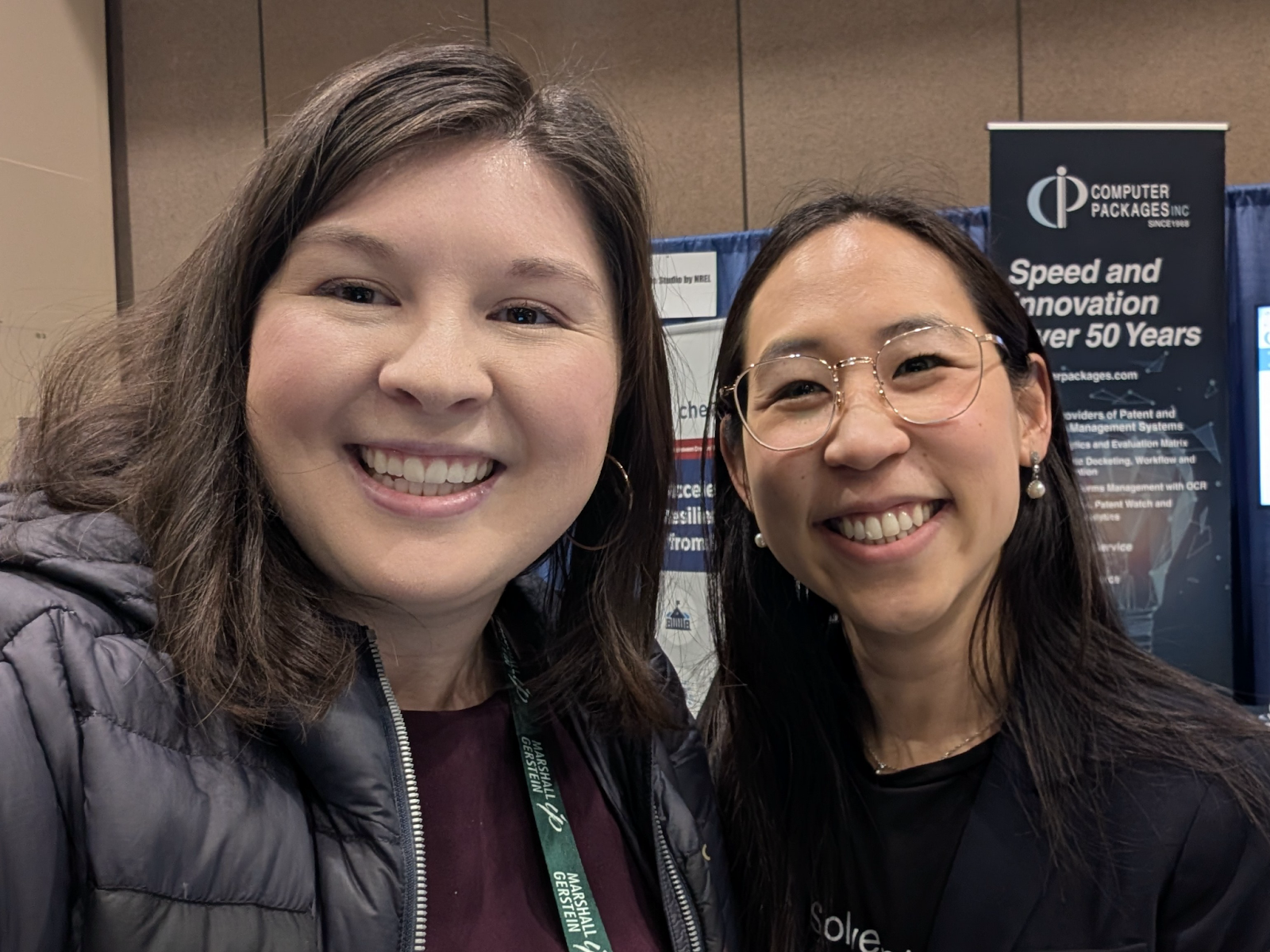
Victoria and Angel at AUTM 2026 in Seattle

Why we’re launching Solve for Higher Education

In light of these conversations, it was a perfect time and setting to share that Solve was launching a special program designed for universities, called Solve for Higher Education. 

Solve for Higher Ed is a partnership program that brings professional-grade patent AI into universities, thereby supporting legal education, experiential learning, and research commercialization with the same tools used in real-world patent practice. We also partner with tech transfer offices and academic research hubs to assist with invention harvesting, patent application drafting, and responding to office actions.

For TTOs, Solve for Higher Education includes access to Solve’s Invention Harvesting, Drafting, and Prosecution Products. Here are some of the products and features at-a-glance.

Invention Harvesting

  • Custom portals to interface with inventors and simplify the invention disclosure submission phase
  • Invention disclosure form creation and enhancement

Patent Application Drafting

  • Full utility application drafting
  • Figure editing and drafting
  • Chemical structure, biological sequences and data analyses
  • Full patent application review functionality

Patent Prosecution

  • Full Office Action response drafting
  • Rejection analysis and charting
  • End-to-end custom review
  • Brainstorm response strategies

Among the many benefits that this program provides, TTOs are eager to participate in this program because clinics can handle more matters with greater consistency, create highly personalized Solve templates, reduce drafting bottlenecks and external spend, and modernize IP tools without compromising on quality. 

If you or your team would like to speak with Solve about this program, email partnerships@solveintelligence.com and we’d be happy to set up a call to discuss your needs.
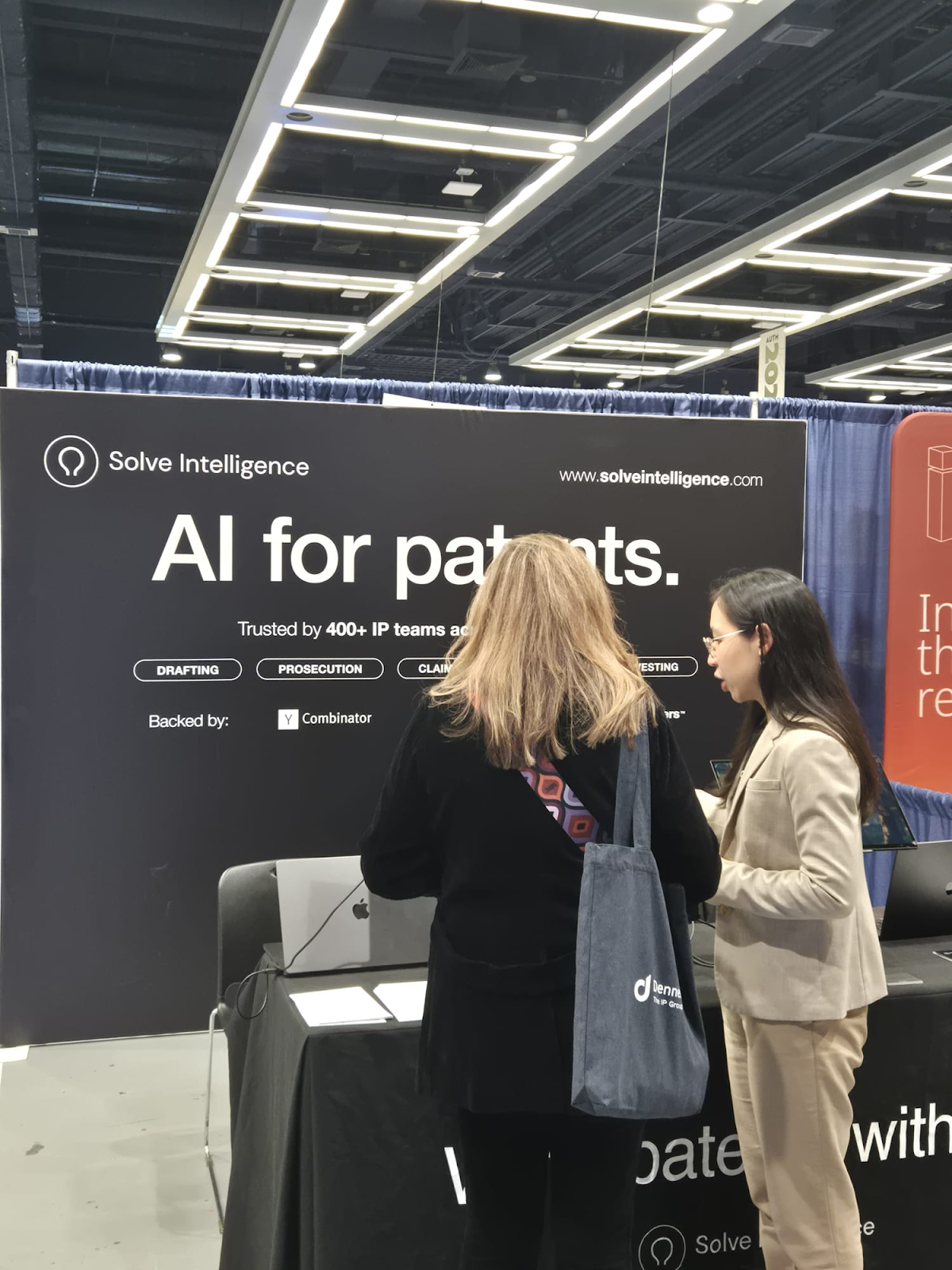
Solve Intelligence Booth at AUTM

AI for patents.

Be 50%+ more productive. Join thousands of legal professionals around the World using Solve’s Patent Copilot™ for drafting, prosecution, invention harvesting, and more.

Related articles

PTAB Case Studies of AI Disclosure Requirements: Part I

Artificial intelligence (AI) is a fast-evolving field with new technical methods, systems, and products constantly being developed. This growth has also been reflected in the dramatic increase in patent filings for AI-related inventions. According to Patents and Artificial Intelligence: A Primer from the Center for Security and Emerging Technology, more than ten times as many AI-related patent applications were published worldwide in 2019 than in 2013, and the increasing trend has only continued since.

Although AI-related patent applications have been on the rise, explicit guidance on patentability requirements have only recently begun to be published by patent offices around the world. Indeed, as a burgeoning field of technology, AI inventions have unique features, such as the importance of training data and the lack of explainability and predictability of trained AI models, that differentiate such innovations from traditional types of computer-implemented inventions (CII). 

These features raise questions about the interpretation of disclosure requirements, among other patentability requirements, for AI-related inventions. For example, how much information, such as source code, training data sets, or machine learning model architectures, should be provided to satisfy the written description and enablement requirements of Title 35 of the U.S. Code § 112(a) or analogs in other patent jurisdictions?

As we await further official guidance from the U.S. Patent & Trademark Office (USPTO) on disclosure requirements for AI-related inventions, we can gather initial indications from recent patent prosecution decisions from the Patent Trial & Appeal Board (PTAB) on such issues. In this article, we study a selection of PTAB appeals decisions for applications for AI-related inventions rejected under § 112. To set the background, we first review a classification of AI inventions and USPTO guidelines on disclosure requirements for computer-implemented inventions. After analyzing three case studies, we conclude with general takeaways and best practices, which emphasize that applicants must disclose specific algorithms and implementation details, not just desired outcomes, to satisfy written description requirements.

Navigating epi AI Guidelines with Confidence: How Solve Intelligence Supports Compliance

In 2024, the Institute of Professional Representatives before the European Patent Office (epi) published its Guidelines on the Use of Generative AI in the Work of Patent Attorneys. These Guidelines provide practical guardrails for the responsible use of generative AI in patent practice, reaffirming that professional responsibility, confidentiality, and transparency remain central when AI tools are used.

In our earlier blog post, we outlined the key principles set out in the epi Guidelines. Since then, the Guidelines themselves have not changed. However, the use of AI in patent workflows has continued to mature, and so has Solve Intelligence.

This update highlights how Solve Intelligence supports compliance with the epi Guidelines in day-to-day practice, focusing on concrete product capabilities and supporting processes.

Patent Attorneys' Guide to Adopting AI: The First 30 Days

Artificial intelligence is already reshaping patent practice, but adopting it swiftly, efficiently and securely is where most firms get stuck. Patent professionals know the productivity upside to using gen AI tools, yet often get derailed when informal experiments run into real-world problems: client confidentiality concerns, inferior work-product quality, delayed internal approvals, and decision-fatigue.

This guide lays out a practical, 30-day plan for adopting AI in patent work, moving from ad hoc trials to a controlled, firm-ready strategy. It shows how you can run a focused pilot, set clear guardrails, train attorneys, and document decisions in a way that satisfies partners, clients, and internal stakeholders.

Hauptman Ham Integrates Solve Intelligence into Patent Practice

Hauptman Ham is redefining patent prosecution with Solve Intelligence. By integrating AI-driven workflows into their patent practice, Hauptman Ham attorneys and agents are delivering office action responses that set a new standard—precise, insightful, and creatively crafted. Their clients are gaining a strategic edge with more innovative outcomes that stand out in a competitive landscape.  

Firm leader Ron Embry describes the value of Solve Intelligence in Hauptman Ham’s patent practice.

“The Patent Copilot system allows practitioners at Hauptman Ham to use more creative strategies in pursuit of broad, defensible patent claims for our clients. We use the advanced functionality of the Solve Intelligence system to explore multiple potential avenues in responding to rejections and prosecuting families of patent applications. We find the tool to be quite useful in integrating different legal strategies into one unified, comprehensive, and nuanced approach to obtaining patent protection for our clients.”