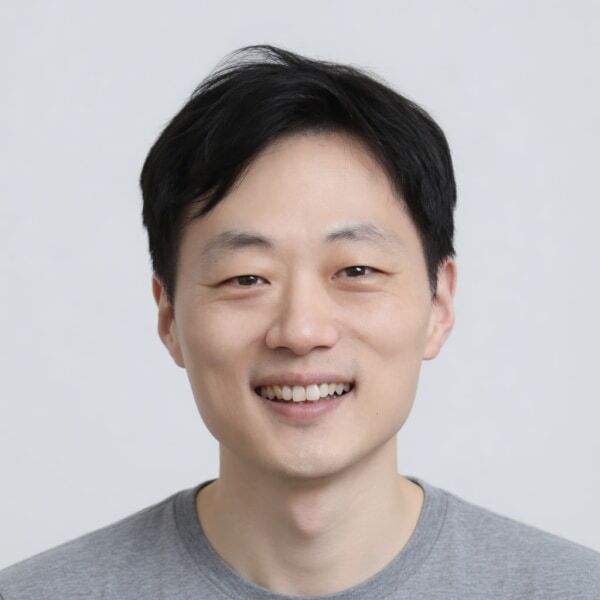
Keunbong (KB) Do

Keunbong (KB) Do

Legal & Product Engineer

KB earned his J.D. from Harvard Law School, where he received the Irving Oberman Memorial Prize. Before law school, he completed his Ph.D. in biophysical chemistry at Stanford University as a John Stauffer Stanford Graduate Fellow and a Korea Foundation for Advanced Studies Fellow, and worked at Samsung SDI as a Senior Research Engineer. He holds a B.S. summa cum laude in chemistry from Seoul National University. KB is registered to practice before the U.S. Patent and Trademark Office, and is admitted to practice in California, New York, and Massachusetts.

Related articles

What Is a Freedom to Operate Analysis, and How Does AI Speed It Up?

A freedom to operate (FTO) analysis is a claim-by-claim assessment of whether a commercial activity would infringe any third-party patents in the markets where it will take place. AI speeds it up by handling the parts that scale badly by hand: surfacing relevant patents, mapping product features against claims element by element, pulling legal status by jurisdiction, and producing a cited, structured draft for the attorney to review and refine.

Key takeaways

•     FTO analysis determines whether a product infringes third-party patents.

•     A valid patent on your own invention doesn’t guarantee freedom to operate.

•     Purpose-built AI patent tools deliver around 60 to 90 percent efficiency gains on structured FTO tasks.

•     Generalist AI and purpose-built patent tools share a surface format; but FTO reliability depends on integration, not interface.

AI for Patents