Blog

Iven Mueller Joins Solve Intelligence
We’re delighted to welcome Iven Mueller to Solve Intelligence as our new Legal and Product Engineer.
.avif)
Dmitry Andreev to join Solve’s Customer Advisory Board
We are excited to welcome Dmitry Andreev, partner at Lowenstein Sandler, to Solve Intelligence’s Customer Advisory Board.

Client Consent for AI: PCC Opinion on epi Guidelines
The Professional Conduct Committee (PCC) of the The Institute of Professional Representatives before the European Patent Office (epi) recently published an opinion on the interpretation of the epi Guidelines on AI in the work of patent attorneys. In particular, the PCC responded to an enquiry regarding guideline 4 and what patent attorneys can do to establish client consent for using AI tools during the course of their practice.
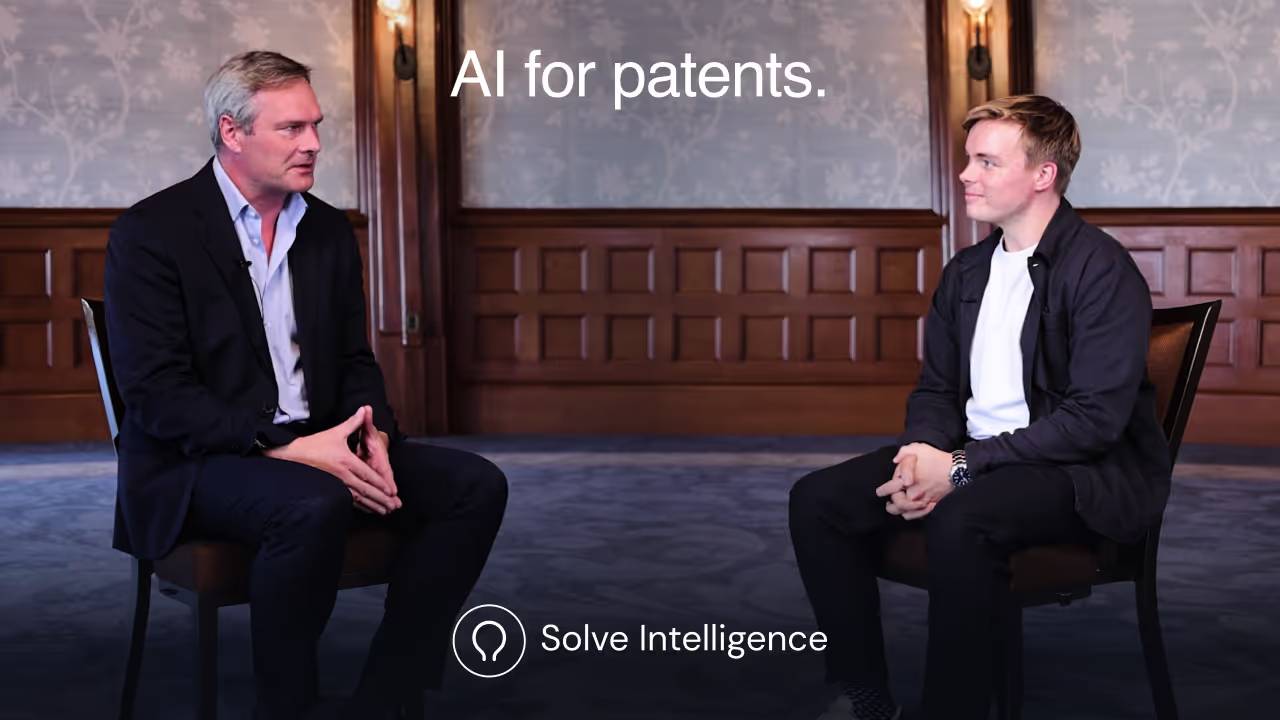
Our First Customer Advisory Board Meeting
In September 2025, we brought together our Customer Advisory Board (CAB) for an in-person meeting at the Hotel Del Coronado in San Diego, just ahead of the IPO Annual Meeting.
Our CAB represents some of the most influential voices in IP. Collectively, the group manages over 160,000 active patents while prosecuting more than 20,000 applications annually. Our CAB members span the full spectrum of practice areas, from software and electrical to mechanical, life sciences, and pharmaceuticals. The composition is 80% private practice and 20% in-house IP teams, giving us a well-rounded perspective on the challenges and opportunities facing the profession when it comes to AI integration.

How AI is Transforming Cross-Jurisdictional Patent Drafting
Patent law might be global in scope, but in practice it’s local - and that creates real complexity for patent attorneys navigating different jurisdictions.
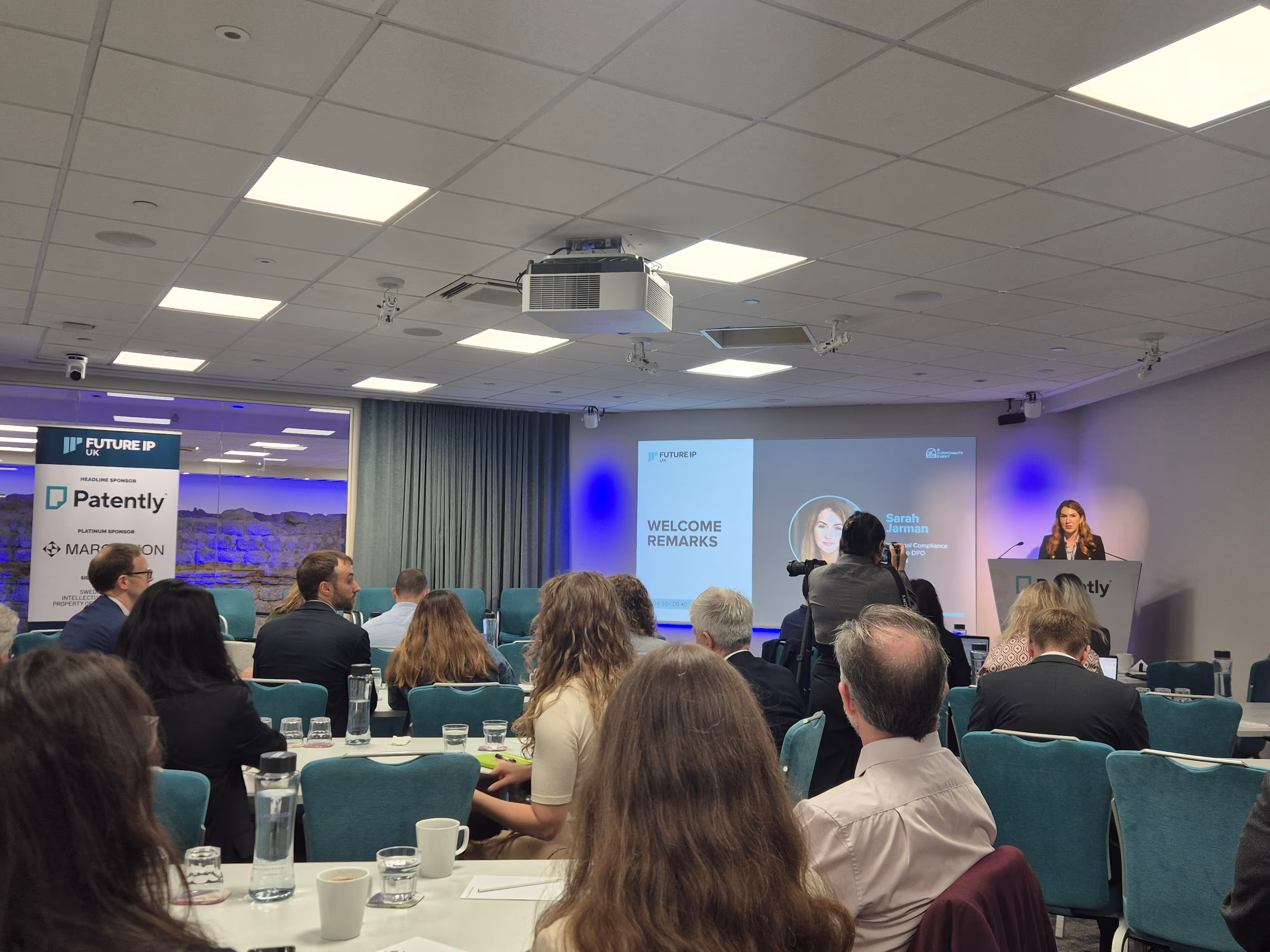
Empowering IP with AI: A Future IP UK Perspective
Artificial intelligence is no longer future-thinking for IP professionals. AI patent software is reshaping how teams draft, search, and manage patent portfolios today.
At this year's Future IP UK conference, IP leaders from industry, law, and government shared what it actually takes to bring AI into established workflows. The conversation revealed that the approach in the UK, generally, has been measured and focused on long-term value over quick wins.
At Solve Intelligence, we've been at the coalface of this transformation globally, working directly with private practice firms and in-house IP teams across multiple jurisdictions. The themes emerging from Future IP UK echo insights we've been exploring for the past two years.
.avif)
How Should Patent Practitioners Evaluate AI Tools for Data Security and Confidentiality?
This article dives into how Solve Intelligence has been prioritising security since inception with best-in-class data protection.