AI is reshaping how IP value is created, transacted, and enforced. That was the unmistakable message from IPBC Global 2026, the flagship annual gathering of the intellectual property community, held at the InterContinental San Diego in June 2026.
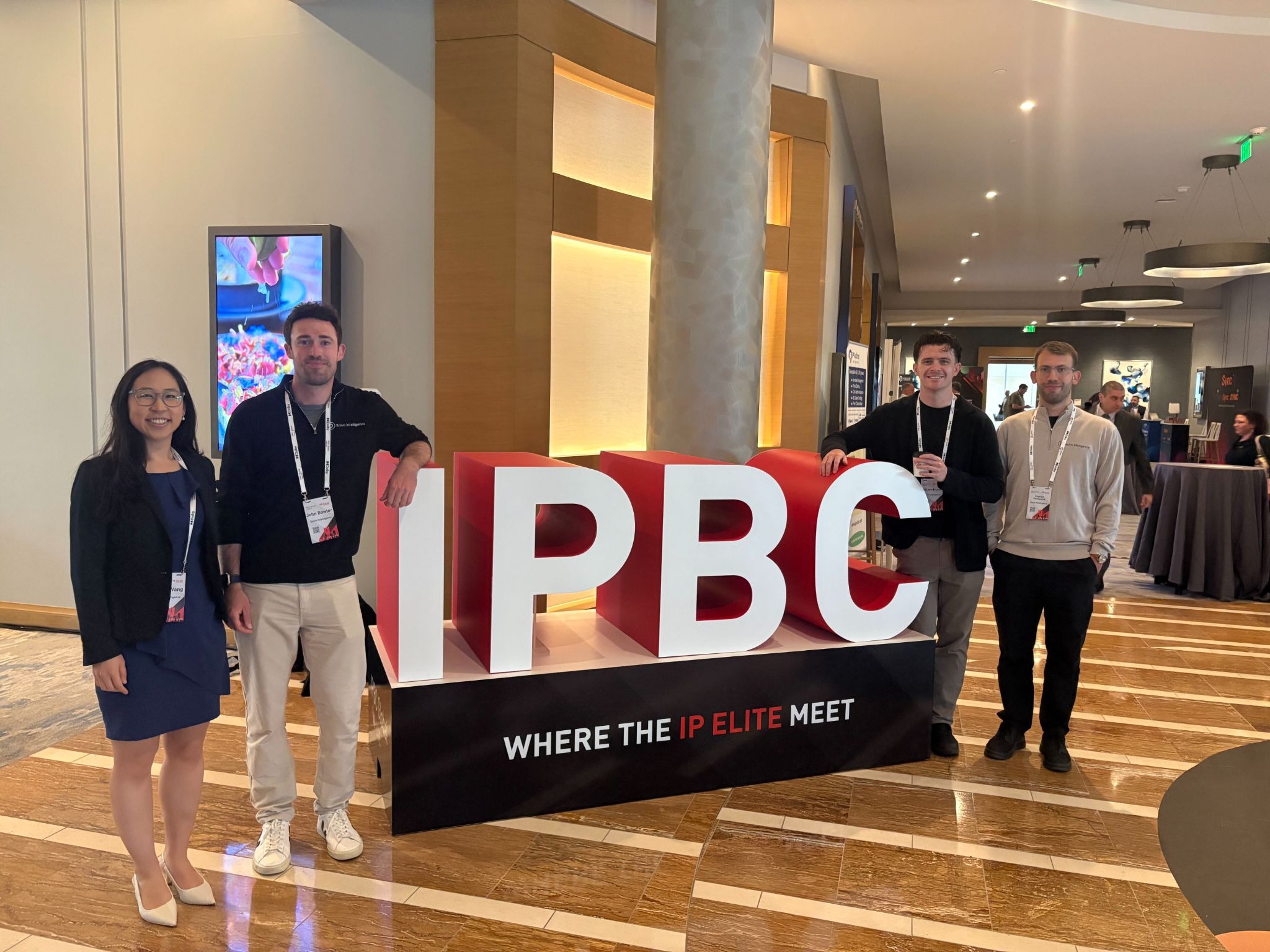
Solve Intelligence was one of the sponsors for this year's conference, joining more than 700 senior IP professionals across three days. Attendees actively discussed how AI changes the economics of patent licensing, what it means for litigation strategy, and whether the profession has the tooling to keep pace.
IPBC draws a different crowd from most IP conferences: licensing professionals, litigation counsel, portfolio strategists, and corporate IP executives. Their questions are about what patents are worth, how to enforce them, and how to transact efficiently. That framing is what makes AI tooling for this audience a distinct and pressing question.
The Day 1 main stage panel on AI for IP transformation set the tone for the conference. Speakers from Meta, IBM, Fortress, and Obsidian Strategies (including former USPTO Director Michelle Lee) tackled AI's impact on licensing negotiations and litigation intelligence directly.
The discussion was candid about the limits of what is currently available. Generic AI tools can generate text. They struggle with the kind of structured legal reasoning, claim mapping, and prior art analysis that licensing and litigation work actually requires.
For a licensing professional trying to assess the strength of a portfolio before a negotiation, or litigation counsel building an invalidity argument, the gap between what a general-purpose LLM produces and what the work demands is significant.
The panel also raised how AI is changing the dynamics on the other side of the table. As AI lowers the cost of identifying relevant patents, modelling claim scope, and assessing damages exposure, both licensors and licensees are operating with more information and faster.
This is where Solve Intelligence is built to operate. Our prior art search and claim analysis tools are designed for exactly this kind of high-stakes, time-sensitive work and the analytical depth that licensing teams and litigation counsel need when position matters.
Across both main conference days, sessions explored patent licensing at the frontier of multimedia, battery technology, life sciences, and the Internet of Things. The SEP landscape (particularly around China) received sustained attention, with a dedicated panel examining risk, reality, and reward for standard-essential patent holders navigating state court dynamics that remain unsettled.
The pattern across all of these sessions was consistent. The IP teams winning in licensing and enforcement have a clear picture of their assets, including a deep understanding of which claims hold up under scrutiny, where the prior art is thin, what a realistic damages model looks like, and how fast they can build and test that analysis. That competitive edge is what purpose-built AI tooling creates in practice.
Solve Intelligence's search and litigation support tools are built around this workflow. Whether the task is prior art investigation ahead of an IPR, freedom-to-operate analysis before launching a product, or claim mapping for licensing outreach, the platform is designed to deliver structured, auditable outputs that practitioners can rely on and take into high-stakes settings.
One of the structural additions to this year's programme was a dedicated IP Finance Forum, running in parallel to the IP Leadership Forum on Day 1. Sessions covered IP insurance, IP in M&A due diligence, and the evolving landscape of IP-backed financing and litigation funding.
The sophistication of these discussions reflects how far the market has moved. IP is no longer treated solely as a defensive asset or a litigation option. It is increasingly structured as capital, something to be valued, insured, financed, and transacted with the same rigour applied to any balance sheet item.
For the IP teams and counsel who support these transactions, the demands on analytical quality are rising. A litigation funder evaluating a portfolio needs the same depth of prior art and claim analysis as a licensor preparing for trial. The tooling that supports those workflows needs to be built for that standard.
A thread running through the IP Leadership Forum was the profession's retention and capacity challenge. Time and time again, leaders were pushed to achieve more with the same (if not more limited) resource. This meant looking for platforms that can open up more licensing conversations, thorough claim analysis, faster turnaround on invalidity searches, and better preparation for negotiations and proceedings.
The AI tools that deliver that outcome are the ones designed around the professional: human-in-the-loop controls, outputs the practitioner reviews and owns, and workflows calibrated to the demands of licensing, litigation, and transactions rather than generic text generation.
Solve Intelligence helps close this gap. The conversations at IPBC reinforced a challenge we hear every day: IP teams are expected to do more with the same resources. Whether evaluating portfolios, preparing for licensing discussions, or conducting prior art investigations, the constraint is often analytical capacity.
IPBC Global made clear that the intersection of AI and IP value creation will only grow more consequential. We are grateful to IAM and the IPBC community for three days of substantive, commercially grounded conversation.
IPBC Global is where the business of IP gets done. From licensing and enforcement to portfolio acquisitions and litigation funding, the decisions that shape the future value of patent rights were discussed in San Diego in June 2026. The AI tools serving this market should be held to the same high standard.
Solve Intelligence is a purpose-built AI platform for patent professionals, covering the full patent lifecycle from prosecution through to litigation support:
See how Solve Intelligence supports the licensing, litigation, and transactions work your IP team is doing. Request a demo.
AI is reducing the time (and, subsequently, cost) required to perform critical tasks such as evaluating patent portfolios, mapping claims to products, searching for relevant prior art, and assessing potential damages exposure. As a result, both licensors and licensees can enter negotiations with deeper analytical insight and better-prepared positions. This is accelerating licensing discussions and raising expectations around the quality of supporting analysis.
Patent licensing and litigation are high-stakes activities where outcomes can hinge on the interpretation of a single claim limitation or prior art reference. While general-purpose AI tools are useful for summarisation, they are not built for the detailed mapping and reasoning required for licensing negotiations, litigation strategy, IPRs, and trial preparation. Specialised patent AI platforms are designed around these workflows, helping teams generate more reliable and defensible analyses where it really matters.
The right choice depends on your team's goals, workflows, and capacity constraints. Start by identifying where your team spends the most time, where analytical bottlenecks exist, and which tasks require the highest degree of confidence. While some AI tools can help with point solutions, many IP teams are looking for support across the entire patent lifecycle. Platforms such as Solve Intelligence are built around the workflows patent professionals use every day.